"Did you say my mom mistakenly left $3.5 million to the veterinarian who cared for her favorite feline?"
"You’re telling me Dad’s brother took a $500,000 insurance policy meant for me?"
These aren’t made-up financial horror stories. These are real-life estate-planning nightmares recounted by veteran attorneys who have seen it all.
When it comes to money and assets amassed over a lifetime, expect the unexpected, "when you don’t have your ducks in a row, and you don’t have your (estate) paperwork in order," says Patrick Simasko, an estate planning attorney at Simasko Law.
No one wants to leave a financial mess for heirs after they’re gone. But as these real-life examples illustrate, crazy things can happen if estate planning must-haves like a will or trust are nowhere to be found after you pass.
Wills gone wild
Assets can end up in the strangest places and with dubious heirs if the deceased botched key estate planning documents. Or failed to update a will after getting remarried or deciding to cut out an estranged child. Or bungled a do-it-yourself online will.
A will and estate planning are often overlooked aspects of financial planning, says Jason Grover, financial planning specialist at Grover Financial Services. But if you want to secure the future of your loved ones, Grover says it’s crucial to clearly outline in a will (or trust) how you want your assets distributed after you pass. If there’s no will, disputes will no doubt arise among family members and heirs, often causing long-term rifts and expensive legal fights.
To illuminate how things can go very wrong when passing down assets to heirs — and how to avoid these unfortunate outcomes — Kiplinger asked estate attorneys to share real-life tales of estate mayhem.
Rules are rules, but look under the couch cushion
It’s vital to know the difference between a holographic will (or a handwritten one that’s not legal in all states) and a formal legal will that is typed, signed by you, and witnessed by two disinterested parties, says John Goralka, an estate planning attorney at Goralka Law Firm. A will, of course, is a legal document that details who you want your assets to go to and how they will be divided up after you pass.
Goralka recalls the recent battle over the estate of music icon Aretha Franklin to underscore the importance of a formal estate plan. The so-called Queen of Soul was a do-it-yourselfer when it came to estate planning. Franklin had two handwritten (holographic) wills found in her Detroit, Michigan, home after her death in 2018. One dated 2010 was found in a locked cabinet. The second one, dated 2014, was found under a couch cushion. Franklin’s four sons disagreed over which will was valid. In 2023, a jury ruled in favor of the 2014 will found under a couch cushion.
To avoid any confusion, if you go the handwritten will route, Goralka says this type of will must be in your own handwriting, state that it’s your last will, and be signed and dated. To avoid confusion, it’s prudent to add the phrase "I revoke all prior wills."
Crazy pet stories
Often, pets are the pet peeves of heirs, who lose out on assets due to the deceased person’s close connection to their furry friends. Sometimes, heirs don’t agree with the wishes of the deceased. But if all the i’s are dotted and the t’s are crossed, they’re often out of luck.
Goralka recalls a client who owned two houses next door to each other. While his client was alive, he and his wife lived in one house and the house next door was home to his cats. Per the will, upon the client and his wife's passing, the estate plan called for the pet’s caretaker to live in the main house while caring for the cats in the second home. So, both pieces of real estate were left to dubious heirs: the caretaker and, by proxy, the cats. (Pets are considered property and thus may not own property.)
Similarly, another female client set aside all her funds in a trust for her two dogs and arranged for a caretaker to live in her house until her dogs passed away.
What to do instead. Consider naming a caregiver or setting up a pet trust with a trustworthy executor. For details, read, I Don't Trust My Adult Kids to Care for My 'Third Child' If I Die. What Should I Do?
Do-it-yourself wills can prove costly
Many people want to save money on estate planning. So, instead of seeing a lawyer, some do their wills online using digital services such as Trust & Will, LegalZoom, and Quicken WillMaker. But, again, in some cases, mistakes can occur, causing costly unintended consequences.
One family opted to go the digital route, and the father intended to pass his assets to his three children equally. “But they basically didn’t know what they were doing and wrote it themselves but got the specific language of the will wrong,” says Goralka. “Instead of saying the money was to go to his three kids, it said it was to his kids and grandkids. And each of his kids had kids, so that’s what they were stuck with just because they were trying to save a few pennies” and not paying for a lawyer.
What to do instead. You can find an estate attorney in your area using an online directory such as Justia, Legal Match, or the American College of Trust and Estate Counsel (ACTEC).
Second marriages often upend estate plans
Getting married after a divorce can complicate estate plans and open the door to unintended outcomes, legal experts say. It’s common for a divorced husband to want everything to go to his second wife after passing, and for the money to then go to his kids when the second wife dies. But often, those wishes are not granted, explains Simasko. When the husband passes, the second wife rewrites her own will and the deceased husband’s kids end up with nothing. That’s because a surviving spouse can change his or her will at any time.
"It happens every day because they don’t understand the rule," says Simasko. "Once the wife gets the inheritance, it’s hers to do whatever she wants with it." And, unfortunately, that includes cutting out the (biological) children of the first spouse.
When it comes to estates, "second marriages are always a nightmare," says Simasko. "When one of the spouses dies, the other one’s going to change everything. And a surviving husband can do whatever he wants with the inheritance."
What to do instead. Consider a postnup or leaving inheritances in trusts that protect your children's interests. For example, a QTIP trust can provide for the spouse and protect the children or grandchildren.
Estranged kids often get passed over, even by pets
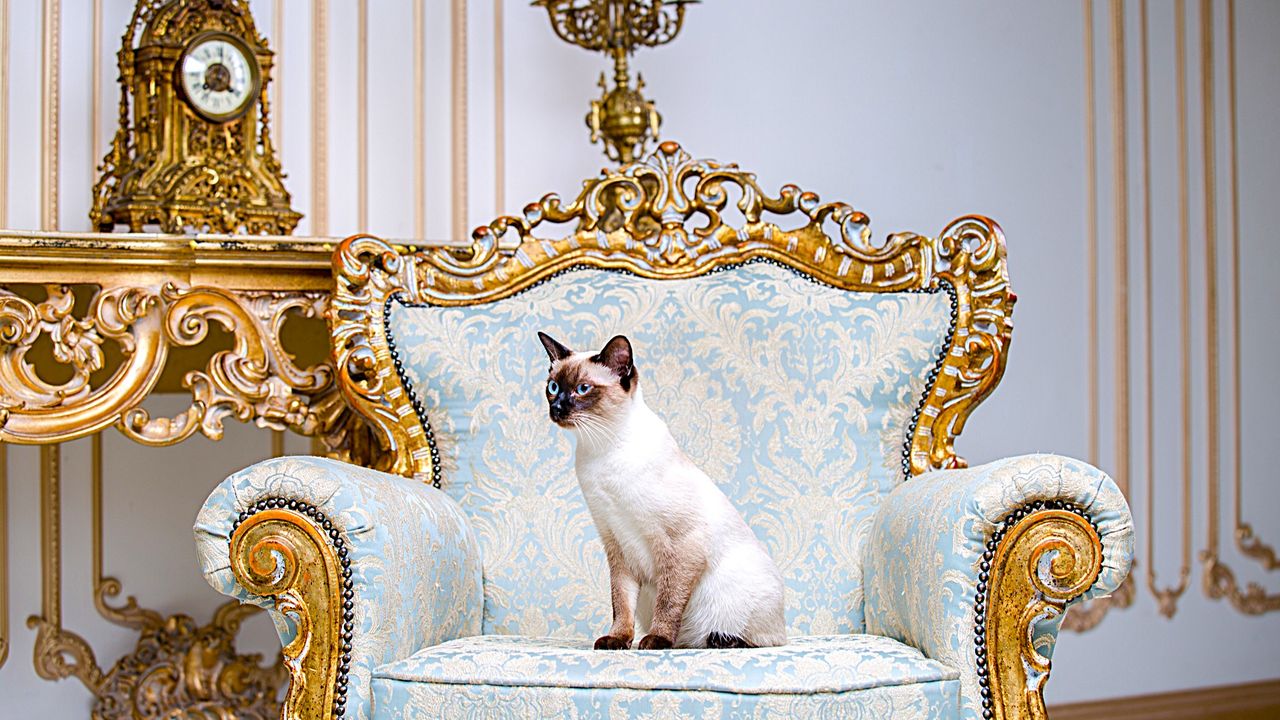
Simasko recalls a client who despised her daughter. She had no relationship with her and wanted to leave everything to her cats. But they erred. "Instead of leaving it to the cats, she left everything to her veterinarian who takes care of the cats," Simasko recalls. "Three and a half million dollars!" In this case, Simasko arranged for all monies to go to charity after the cats passed away. But the estranged daughter still got nothing.
What to do instead. There may be legitimate reasons to disinherit someone, such as an estranged child (unless the child is a minor). The rules are complex, including state rules, so it's best to consult an estate attorney.
Caretakers on the take
Simasko recalls a case involving two elderly men living together with the assistance of a hired nurse. One suffered a heart attack and was hospitalized. While he was out of the house, the caretaker came over to the house with her husband and had booze-filled parties with the old gentleman not hospitalized. "And the next thing you know, the caregiver is on (a beneficiary) of a $500,000 CD (certificate of deposit) and joint owner of a $500,000 lakefront house,” says Simasko. “It’s not funny. It’s exploitation."
When it comes to financial windfalls after one’s death, the biggest fights are over who gets the money, says Simasko.
"You’re leaving it to the caregiver and cutting the kids out?" says Simasko.
What to do instead. Consider a durable power of attorney for anyone who may have dementia or be susceptible to scam artists, and don't put off estate planning until you are elderly.
Beware of crooked beneficiaries
Make sure you select honest beneficiaries who will do as you wish with the proceeds of the inheritance. Simasko recalls a divorced father who had a $500,000 insurance policy through workplace coverage intended for his two-year-old son. "He didn’t want to leave the policy to his ex-wife, so he named his brother as the beneficiary of the life insurance policy," says Simasko. "Well, the brother got the $500,000 upon his death, and he kept every dime of the money and the two-year-old got zero."
Says Simasko: "I guess the lesson here is you really can’t trust anyone when it comes to money."
Keep in mind that beneficiary designations override a will. Although the brother's decision to keep the money was unethical, it was perfectly legal.
What to do instead: Make sure you understand the mechanics of naming a beneficiary on your accounts. If you have young children, consider setting up a minor's trust or naming a custodian under the Uniform Transfers to Minors Act (UTMA).