For a long time, universities have been upheld for serving the public interest. But what if they collude with extractive forces, or become one, in the name of progress?
This is a central question at Sam Yan Film and Ideas Festival (SYFIF). Organised by Sam Yan Press, SYFIF 2026 brings together scholars, advocates, artists and members of the public to explore the power struggle in urban development, democracy and technology.
Running throughout this month, the first edition features a wide range of activities from lectures to film screenings.
"SYFIF has been organised to show that Sam Yan is more than a commercial area or a piece of land owned by Chulalongkorn University," said Netiwit Chotiphatphaisal, founder and executive editor of Sam Yan Press, who campaigns for the protection of the city's heritage.
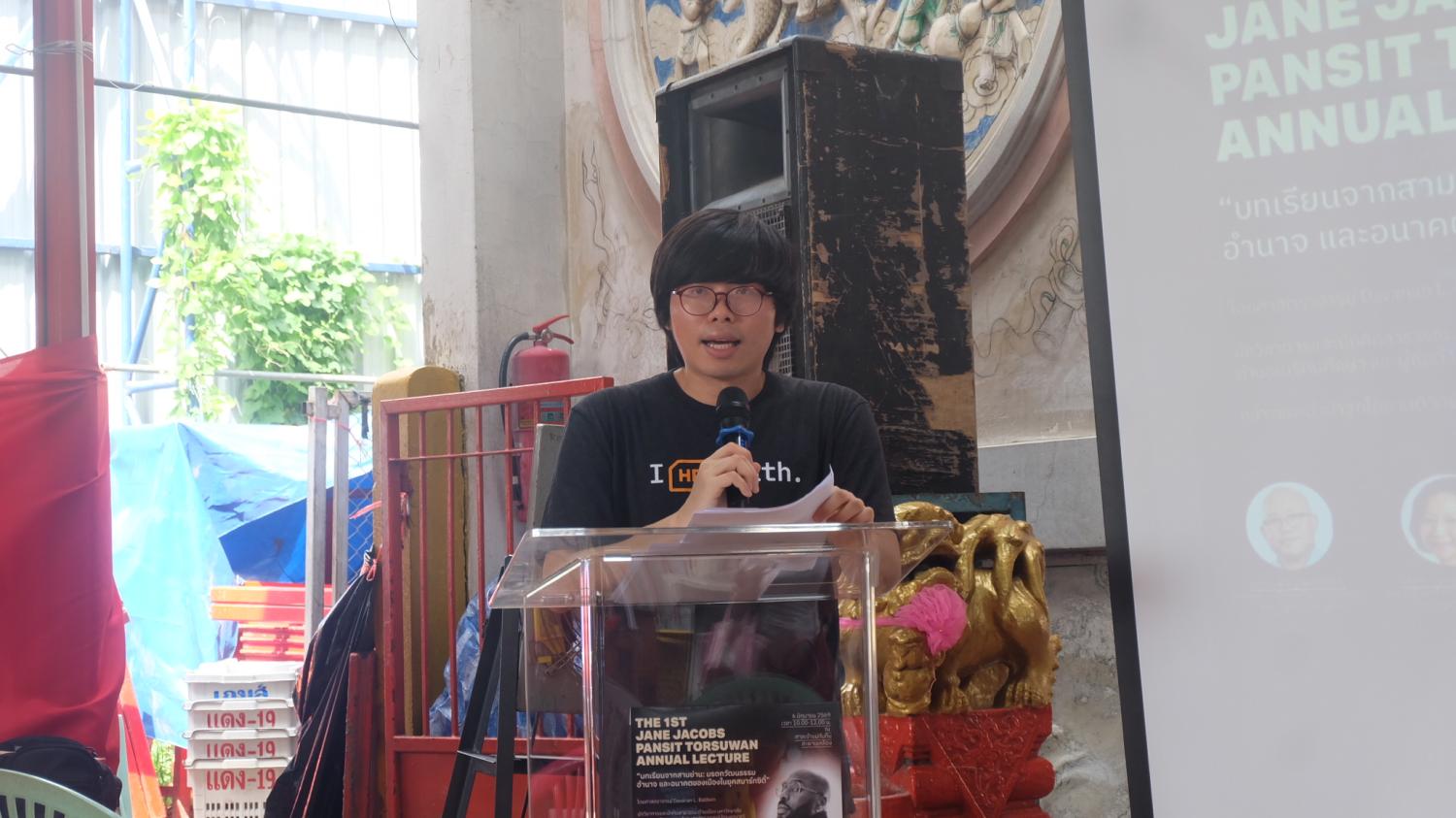
"Sam Yan has its own history. Communities settled here before Chulalongkorn University was founded [in 1917]. SYFIF is a reminder of their voices and stories and the university should respect their dignity and rights."
The festival is unfolding at the very heart of ongoing conflict. The Property Management of Chulalongkorn University (PMCU) sought eviction of a caretaker of the Chao Mae Thapthim Shrine in 2020. According to Netiwit, Penprapa Ployseesuay is appealing against the lower court's ruling in favour of the landowner. There have been many negotiations. The next one is scheduled for September.
Meanwhile, students and community residents took legal action to halt a redevelopment project, titled Block 33, that surrounds the Chao Mae Thapthim Shrine last November. The Central Administrative Court accepted their complaint against the Bangkok Metropolitan Administration for allowing a construction permit despite breach of regulations.
"The cases are still ongoing. However, the PMCU already returned the deposits to prospective condo buyers," he said.
UniverCities
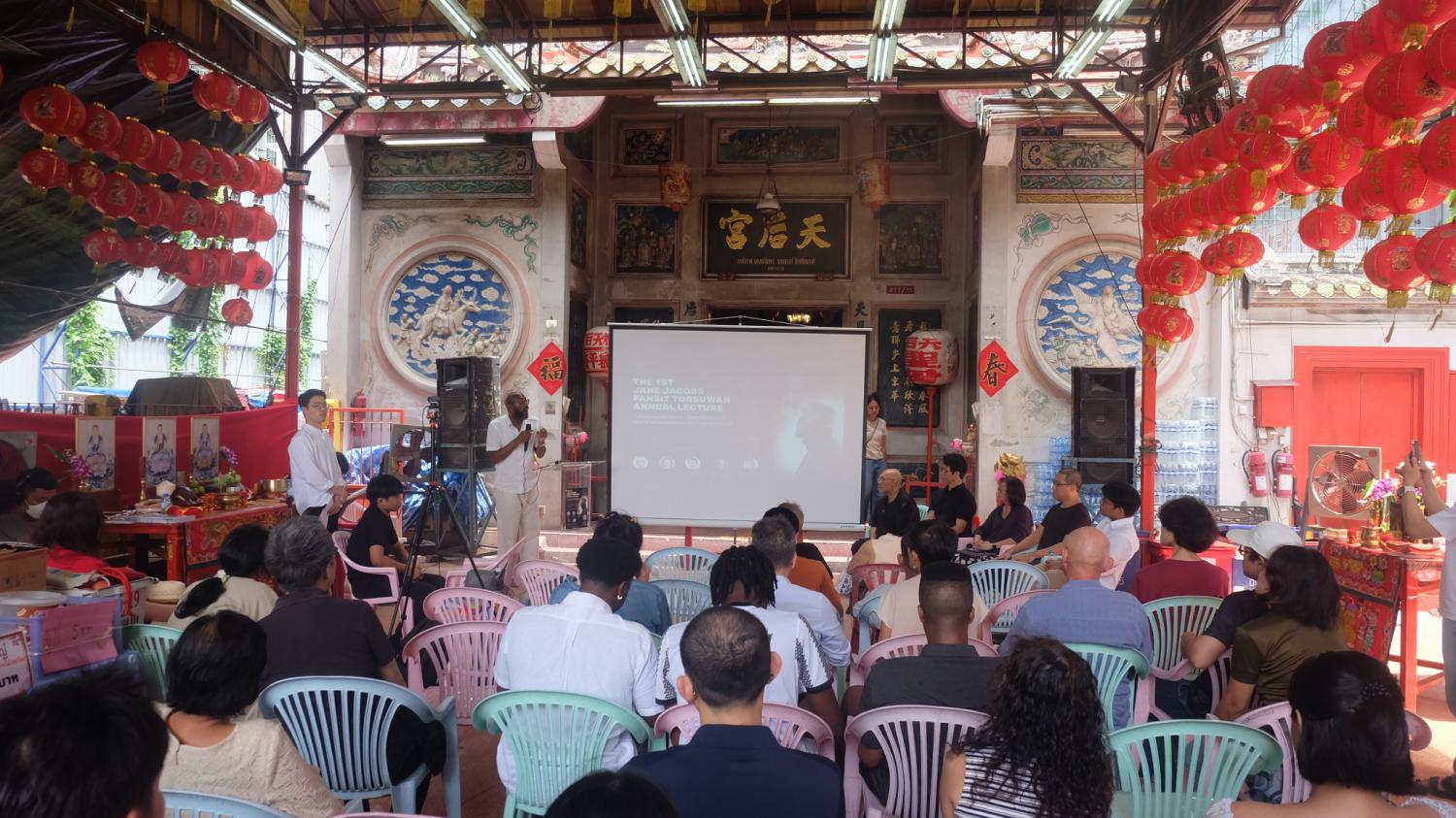
In a lecture titled "Many Sam Yans To Come: The Fight For Heritage And Power In The Age Of Smart Cities", Prof Davarian L. Baldwin, a historian and founder of the Smart Cities Research Lab at Trinity College in the US, said the phenomenon is "not merely a local heritage dispute", but "part of a much larger global shift". He highlighted the transformation of universities into urban developers.
"They build districts, manage land portfolios, broker corporate partnerships, shape housing markets, brand neighbourhoods, police public spaces, curate cultures and determine which histories are allowed to remain visible in the future that they are constructing," he said.
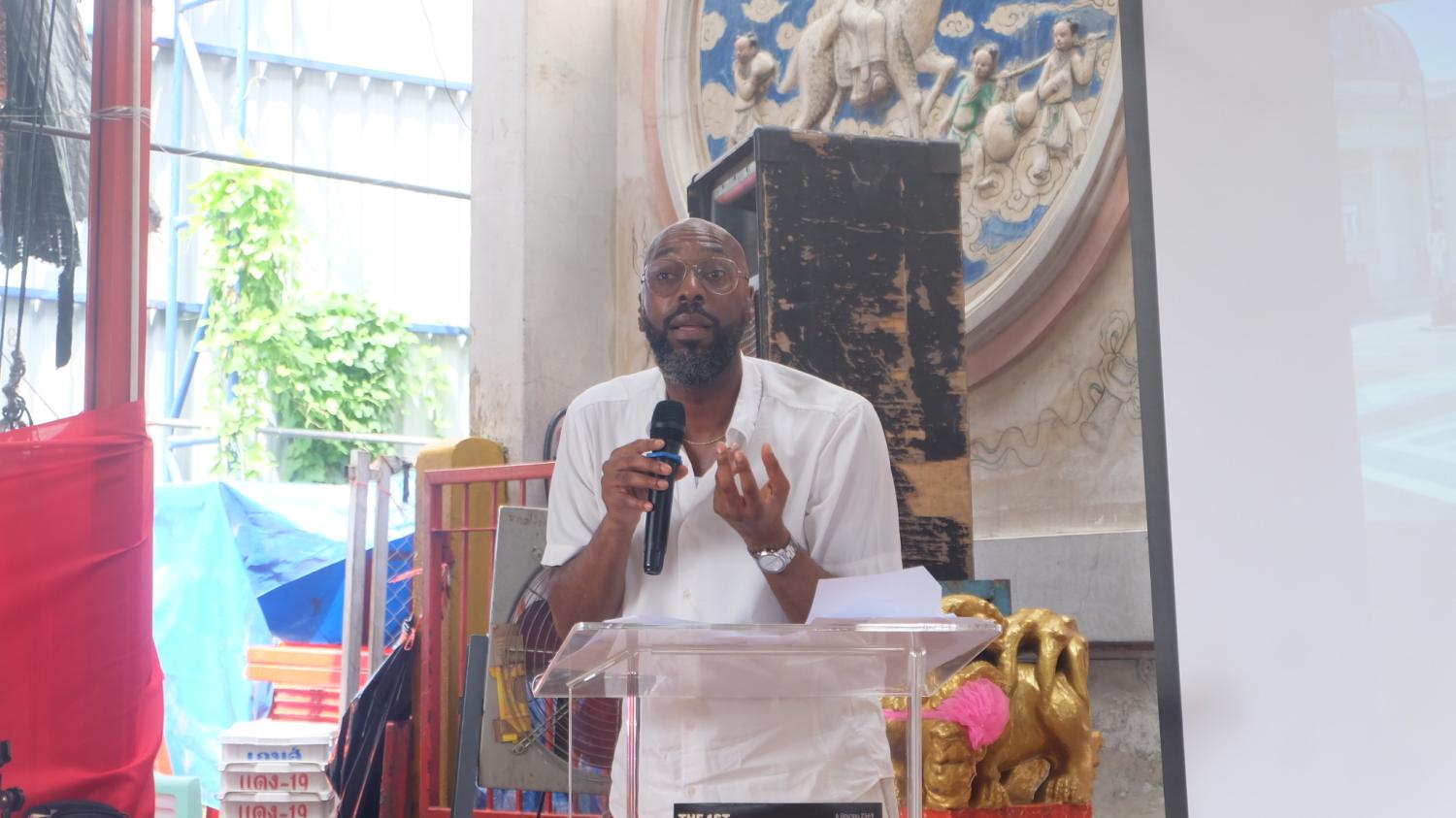
In other words, institutions of higher education have become what Baldwin labels as "UniverCities". He attributes the emergence of university towns to the decline of state subsidies to higher education. Universities develop campuses to generate revenue, but their growing power comes at the expense of surrounding communities, especially displacement of low-income or migrant residents.
In his book In The Shadow Of The Ivory Tower, Prof Baldwin shared case studies of university influence.
For example, the Checkerboard Lounge, a legendary blues club in Bronzeville, Chicago, was closed for months in 2003 due to building code infringement. The University of Chicago offered the club's owner a deal -- a cheap lease at its shopping centre in Hyde Park. While protesters alleged it stole the cultural landmark, the university defended its actions as heritage preservation.
Prof Baldwin said he envisions more just, equitable urban futures, for example, through alternative models of housing and collective action.
Developed by the University of Winnipeg in Canada, the Downtown Commons provides affordable and market-based living options in the city.
New Haven Rising, a local organisation, successfully campaigned for US Ivy League university Yale, property-tax-exempt, to pay its fair share to the city of New Haven, Connecticut. This community-led campaign has spread across the USA.
At the end of his lecture, Prof Baldwin said he stands with community residents at Sam Yan. Their struggle is a wake-up call to resist, reclaim living practices and demand justice.
"Let us remember the future of the city is not theirs. It is ours. It is shaped by those who refuse to disappear. So let's rise together to defend the right to the city. Because together, we can turn Sam Yan from loss into a legacy and a future for all," he said.
Maximising Market Value
Artit Gowitwarangkul, translator of David Harvey's Rebel Cities: From The Right To The City To The Urban Revolution, questioned if Chulalongkorn University remains committed to the public good. He compared sluggish improvement in educational facilities with the scale of land development to demonstrate the university's conflicting roles and oversight.
"Given King Rama VI's intention, commercial use of land is allowed to provide a financial basis for making education accessible, doing groundbreaking research and inspiring society," he said.
Assoc Prof Pitch Pongsawat, a political scientist at Chulalongkorn University, said the phenomenon is "part of neoliberalisation of urban land development". It accumulates wealth by means of dispossession.
"Commodification of land not only dispossesses the poor from the area, but also makes students vulnerable. It is said that costs of living are higher than tuition fees," he said.
When land development and education work towards the same goal of increasing market value, it has a moral impact on students, he noted.
"It is your individual skill, not the community, that must be improved. Students just focus on upskilling and reskilling," he said.
Assoc Prof Pitch attributed the trend to lack of awareness of the right to the city. While there is no rental control, home ownership is increasingly unaffordable. It is imperative that the state take greater responsibility for its citizens.
"Rental policies empower people because tenants, landlords and the state must be at the table together. Private ownership is just one form of land ownership," he said.
Assoc Prof Pitch emphasised that the university is a public institution. Any investment should not harm the public.
"Administrators must realise that the public owns the university and its property," he added.
Assoc Prof Boonlert Visetpricha, lecturer at Thammasat University's Faculty of Sociology and Anthropology, echoed the same view.
Universities should educate the public rather than maximise profits. Gentrification hinders access to land use. Often, displacement goes unnoticed, for example, clearance of a riverside slum community in Siri Ammat, Phra Nakhon. The phenomenon is now spilling over to his suburban campus.
"Although there is no dispossession, a by-product of land development can displace people. Affordable housing in Rangsit is increasingly hard to find," he said.
Assoc Prof Boonlert stressed that the public must understand the right to the city.
"Sooner or later, giving market forces free rein will affect all social classes. Students are playing a crucial role in raising public awareness of our right. The city should belong to all, not profiteers," he said.
SYFIF 2026 runs until Sunday. For a full list of programmes, visit samyanpress.org/syfif2026.