
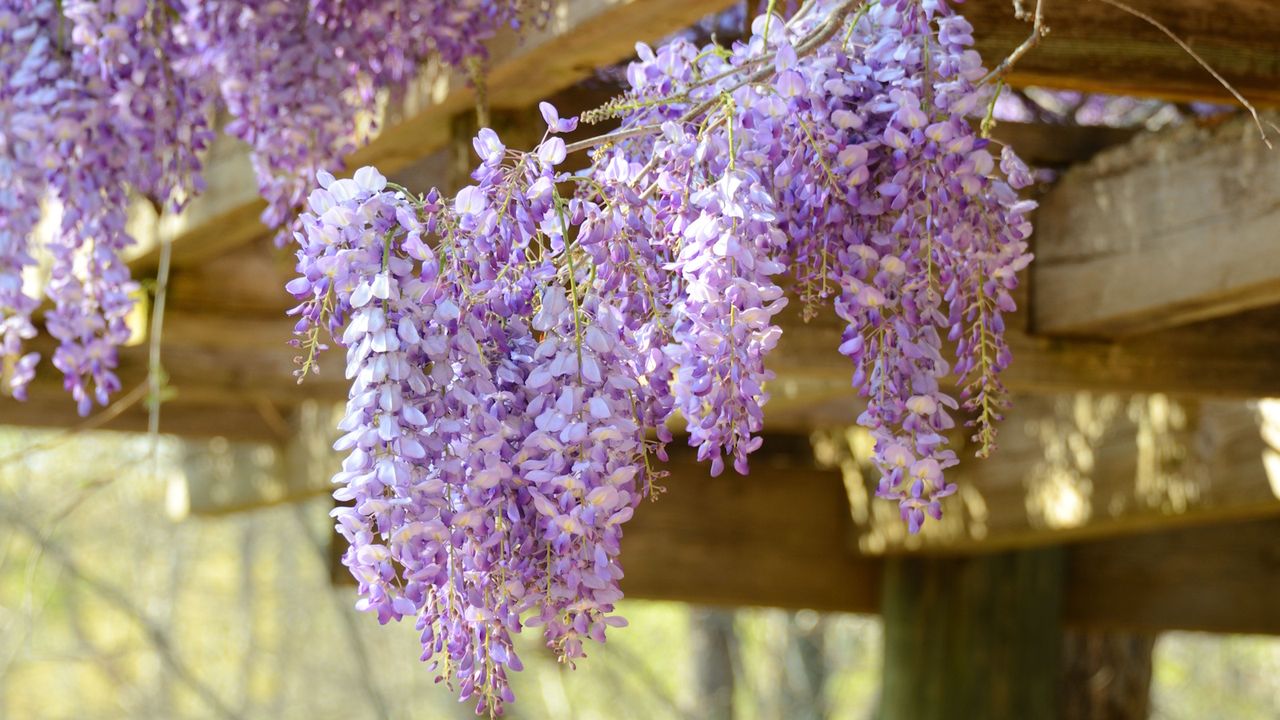
By June, your statement wisteria climber is done flowering and focusing on foliage growth. While it's easy to assume it can be left alone for the rest of the year, neglecting wisteria summer care can set up next year's display for disaster.
The truth is wisteria care is year-round, even if its blooms only stick around for a few weeks at a time in May. After blooming, deadheading, light pruning, and tying in new growth is essential to keep this climber in top condition and support the vigorous growth it's putting out. Plus, a little TLC now will help your plant conserve energy for next spring's blooms.
So while there isn't anything major to do this month, there are still some key tasks to tick off. Here, with insights from a professional gardener, I talk through what to do with a wisteria in June – you'll want to have a reliable pair of pruning shears to hand, like these Fiskars bypass pruning shears on Amazon.
1. Deadhead Spent Blooms
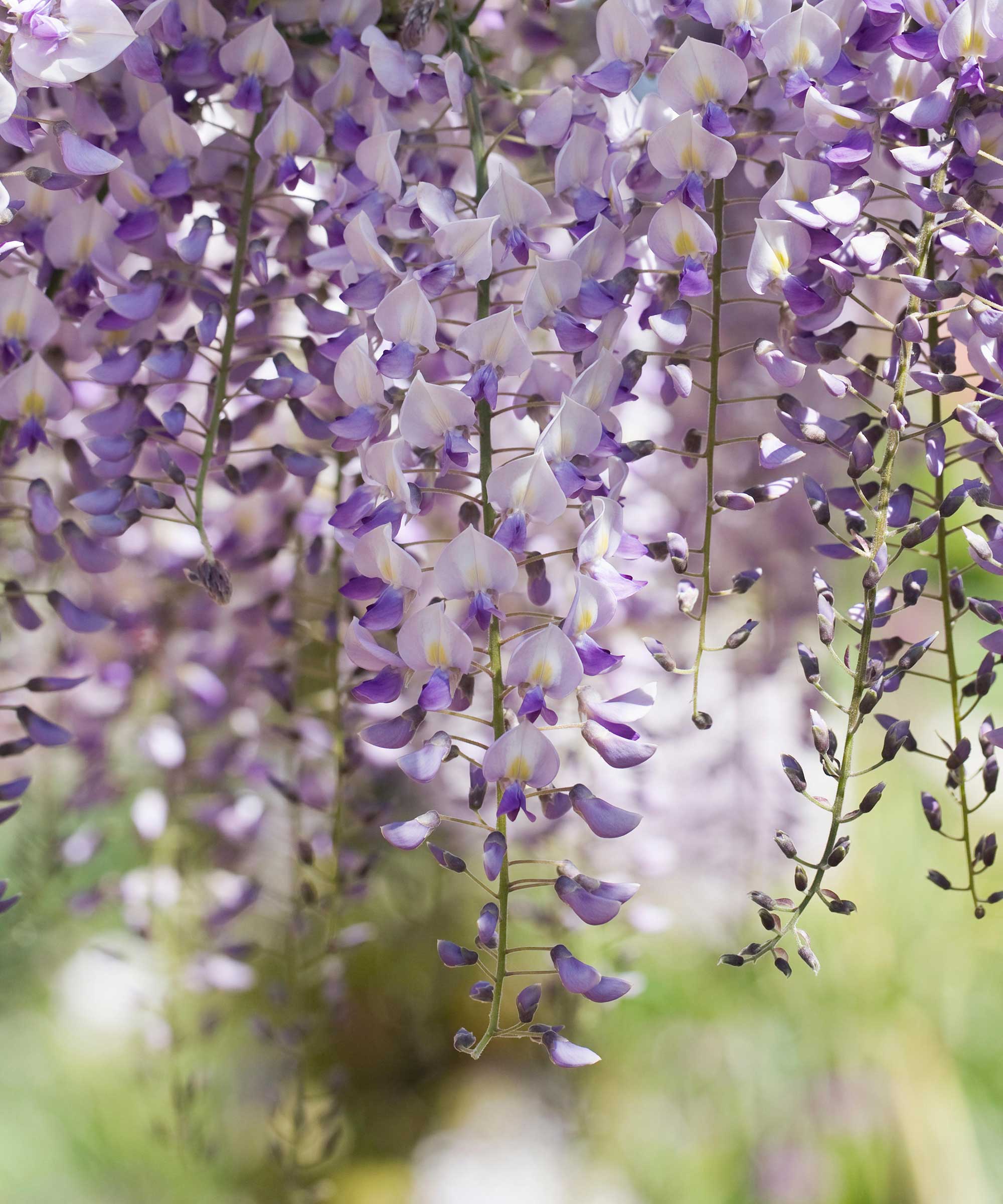
Wisteria has iconic purple, pink, and white raceme clusters that typically come out for around two to three weeks in spring. Once they start to fade, they lose their color and shrivel up.
You can tidy up its appearance by deadheading your wisteria to remove the spent blooms.
Not only does this give it a cleaner look, it also helps redirect the plant's energy from seed production to new growth, conserving energy for another showy display next spring.
You should do this by taking sharp pruning tools and cutting back to the first leaf node below the spent flower. If your wisteria is towering, you might find these long-handled Fiskars pruning shears on Amazon make it easier to reach.
2. Trim Whippy Shoots

Summer marks an important time for pruning your wisteria, as it has long, straggly green shoots from spring which need taming.
'In June, the focus should be on managing new herbaceous growth (known as whips) and keeping it neatly contained within the canopy you’re aiming to maintain,' says Dave Smith, Director of Estate Gardens and Grounds at The Inn at Little Washington.
You should trim this unwanted vegetative growth with clean and sharp shears (because it will be soft, you can use these Felco F2 bypass pruners from Lowe's), cutting back to about five or six leaves.
As well as redirecting the plant's energy, this helps improve airflow and sunlight exposure to the base of the stems. This allows the wood ripen in preparation for prolific flowering next year.
3. Tie In New Growth
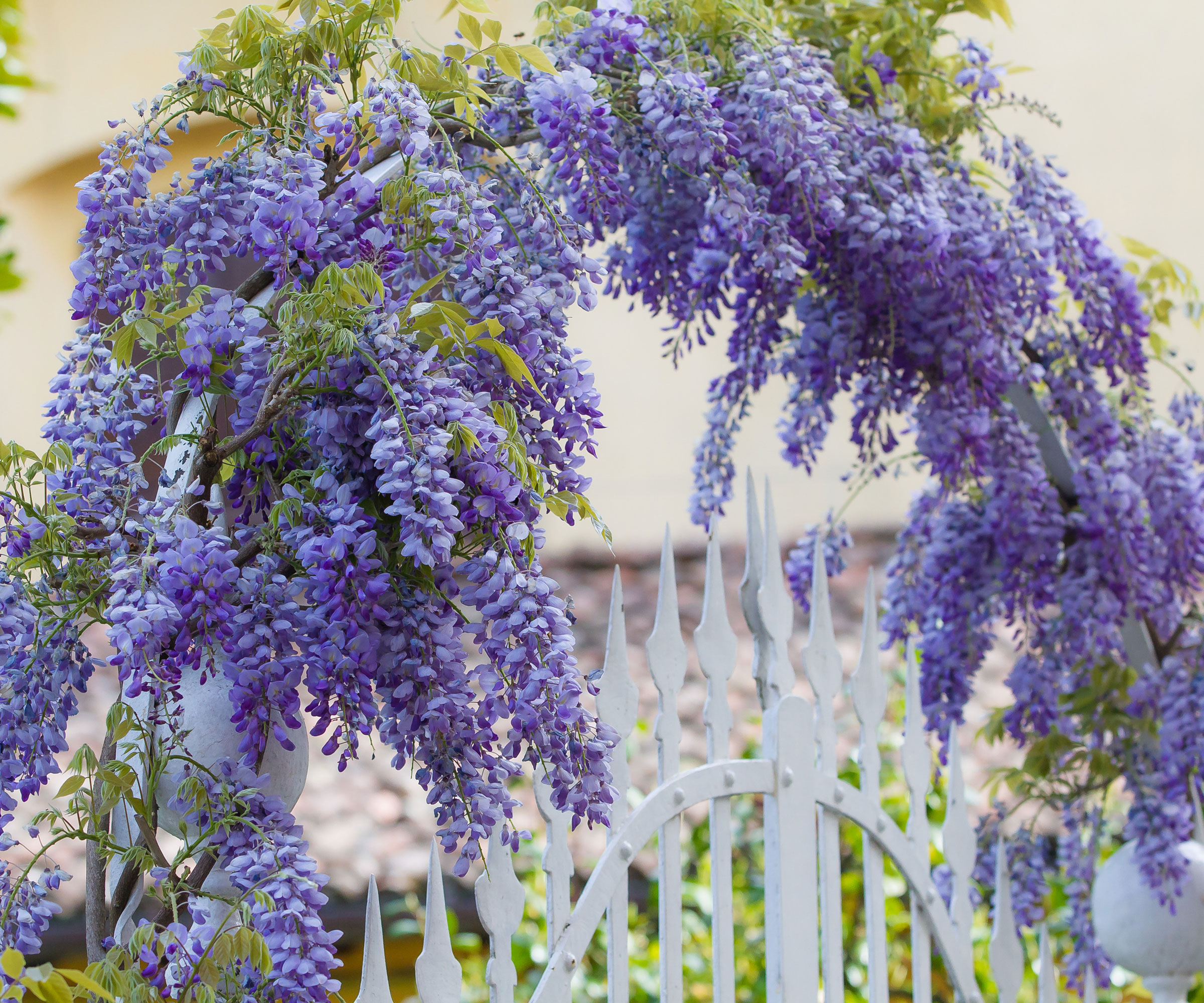
With wisteria being a climber, many of us choose to grow it up a trellis (you can even use this Wayfair planter box trellis for a smaller wisteria variety) or on wire up the side of a wall. As new growth emerges in the spring and summer, it's important to train and tie in wisteria shoots.
This new growth is different to the long, whippy, tangled growth that needs pruning back. Instead, this is flexible new growth you want to form the plant's structure.
Generally speaking, this is the growth appearing in the right spot and growing in the right direction along your plant support.
'Summer care for wisteria is largely about control and structure, ensuring the plant doesn’t become overly vigorous or unruly,' Dave describes.
You want to use jute twine (like this from Lowe's) or soft ties (like this on Amazon) to create a figure-of-eight loop that provides space between the shoots and the support so it can thicken without becoming damaged.
It's popular to train wisterias in a fan shape, keeping foliage growth neat and providing more coverage of blooms by distributing the plant's energy more evenly.
What to Shop
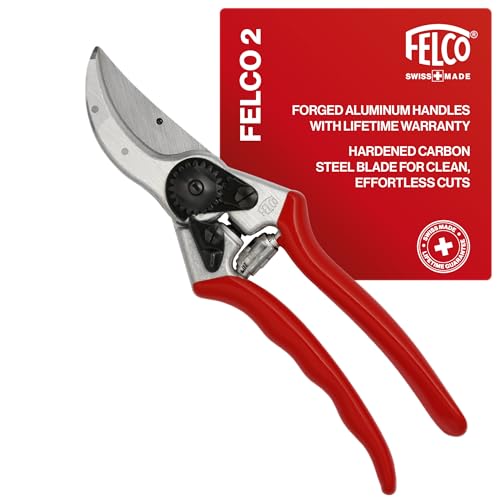
These Felco F2 pruning shears are made for lifetime use, with easily replaceable parts. They're lightweight and strong, with aluminium handles.
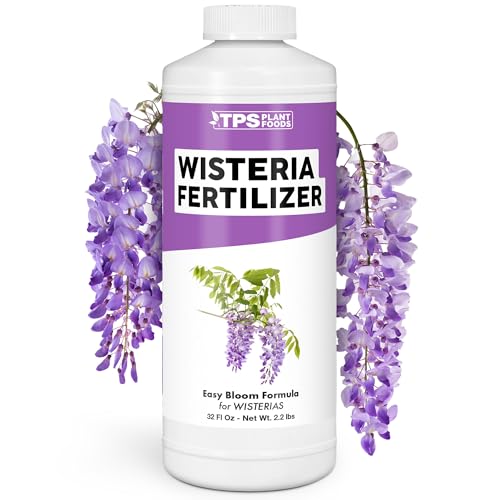
Stock up on this wisteria fertilizer so you're prepared to fertilize your wisteria in early spring ahead of blooming. Dilute with water to apply.

These long-sleeved gardening gloves are thorn-proof to protect your hands and arms when tending to woody and thorny shrubs.
As summer temperatures arrive, don't forget to also water your wisteria deeply to prevent heat stress and keep it hydrated. This is especially important if you're growing your wisteria in a pot, which will dry out much more quickly than ground-planted wisteria.
If you love inspiring garden ideas, outdoor advice, and the latest news, why not sign up for our newsletter and get the latest features delivered straight to your inbox?