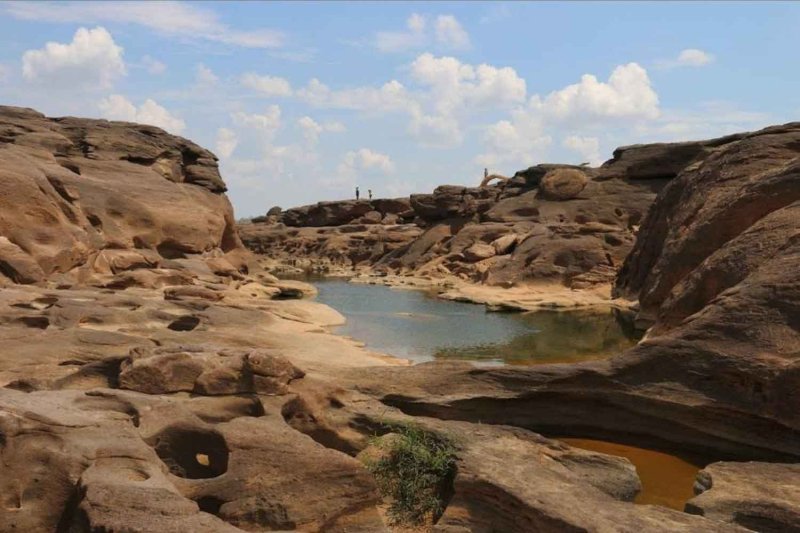
A proposal is going ahead to nominate Ubon Ratchathani Geopark for recognition as a Unesco Global Geopark, highlighting its unique geological formations, fossil heritage and rich local culture.
The move, put forward by the Ministry of Natural Resources and Environment and approved by the cabinet on Tuesday, aims to elevate Thailand's natural and cultural assets to international prominence while fostering sustainable tourism, education and community-based economic development.
Deputy government spokeswoman Lalida Persvivatana said Unesco Global Geoparks promote conservation and sustainable use of geological, archaeological, ecological and cultural heritage. They encourage local community participation in managing resources responsibly.
There are currently 229 Unesco Global Geoparks in 50 countries worldwide. Thailand already has two recognised sites -- Satun Geopark and Korat Geopark -- while Khon Kaen Geopark is under review.
Ubon Ratchathani Geopark spans 1,829 square kilometres across four districts: Pho Sai, Sri Muang Mai, Khong Chiam and Sirinthorn. It is internationally significant for landscapes shaped by the erosion of the Mekong River, including the famous "Sam Phan Bok" rock formations, steep cliffs and stone pillars. The area also contains important fossils from the Khok Kruat Formation, such as dinosaurs, pterosaurs, ancient crocodiles and other vertebrates from the Cretaceous period, making it one of Thailand's richest palaeontological sites.
Beyond geology, the geopark preserves archaeological sites, traditions and local wisdom, such as the Pak Bong fish scooping festival, riverside community culture and ethnic diversity. These elements reflect the deep connection between nature, history and local ways of life.
Established as a local geopark in 2011 and recognised nationally in 2023, Ubon Ratchathani Geopark has a clear management system, with a coordination centre at the Provincial Administrative Organisation. The nomination has been endorsed by Thailand's National Geopark Committee, citing readiness in scientific knowledge, community involvement and sustainable development potential.
Thailand must formally declare its intent to Unesco by July 1, and submit application documents between October and November. Unesco experts will then conduct evaluations before granting official recognition, according to the spokeswoman.
Ms Lalida said Unesco certification would enhance global awareness of Thailand's natural and cultural heritage, attract international tourists and scholars and strengthen conservation efforts.