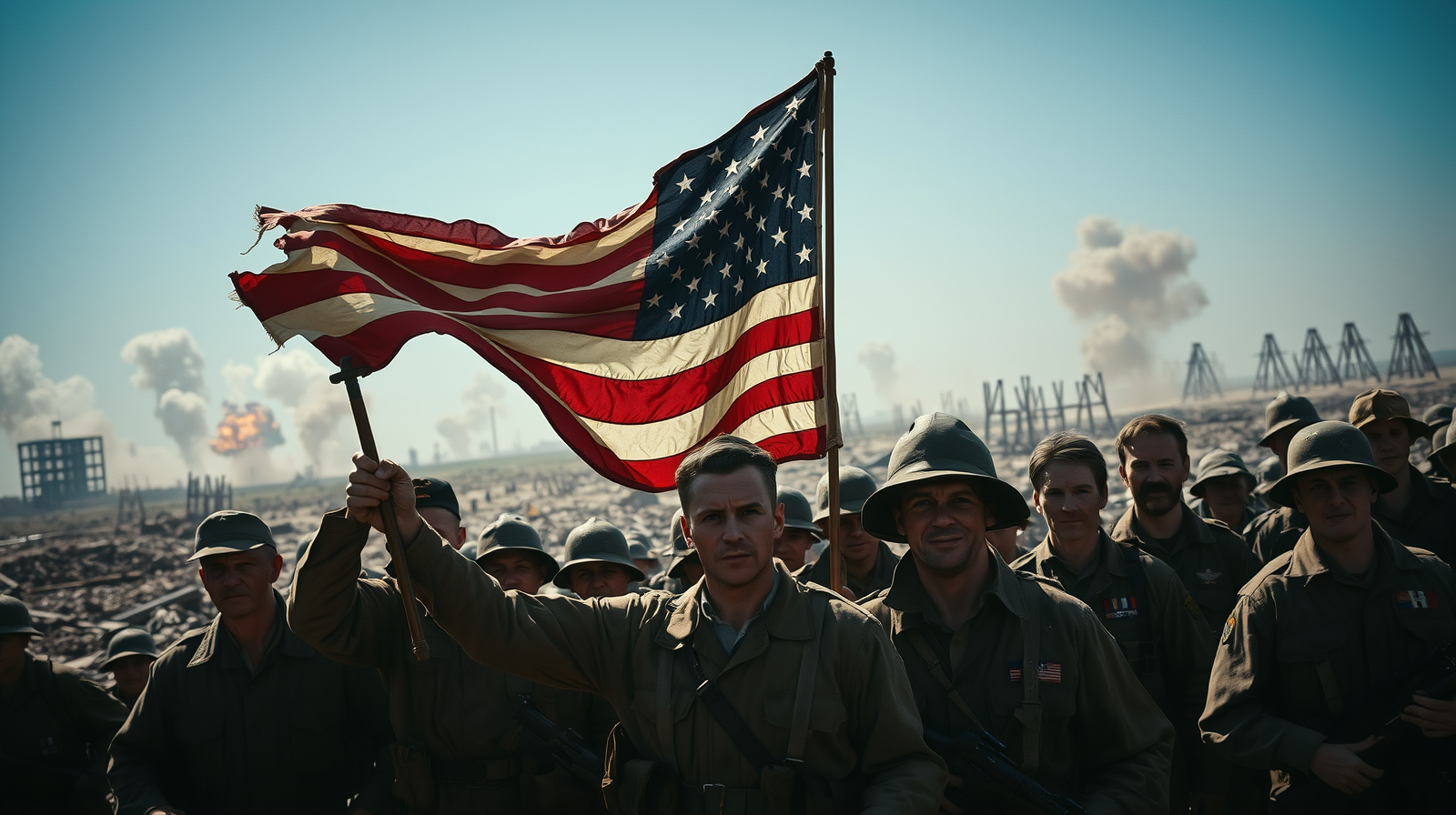
In January 1917, the United States had spent nearly three years watching Europe tear itself apart and most Americans were fine with that. President Woodrow Wilson had just won reelection on the quiet promise that he had kept the country out of the war. The public largely backed him. Crossing the Atlantic to die in someone else's trenches was not something ordinary Americans were eager to sign up for. German-American and Irish-American communities, neither group particularly warm toward Britain, made their feelings heard. Neutrality was not just government policy it was genuinely popular, almost settled. Then a single intercepted telegram arrived on the right desk, and everything changed.
Get breaking news anytime, anywhere. Download the TOI app now!
The Zimmermann Telegram and Germany's secret offer to Mexico
On January 17, 1917, British naval intelligence handed American ambassador Walter Page a decoded message that had been sent by German Foreign Secretary Arthur Zimmermann to the German ambassador in Mexico. The contents were extraordinary. Germany was proposing a wartime military alliance with Mexico. In exchange for joining the war against the United States, Mexico would receive German financial support and help in recovering the Texas, New Mexico, and Arizona territory it had lost decades earlier. When President Wilson released the telegram to the American press on March 1, the country's appetite for neutrality collapsed almost immediately. The idea that Germany was quietly arranging for a neighbour to attack the southern border while the war raged in Europe was not something the American public was willing to ignore.
How British codebreakers in Room 40 intercepted the message
The telegram reaching American hands at all was the result of a remarkable intelligence operation the British had been running since the very start of the war. In early August 1914, a British cable ship had severed Germany's transatlantic telegraph cables in the North Sea, forcing all German diplomatic communication to route through lines that Britain either controlled or could monitor. Room 40, the Royal Navy's codebreaking unit inside the Admiralty building in London, had been quietly intercepting and decrypting German messages for years. By the time Zimmermann's note passed through their hands, the unit had decoded roughly 15,000 intercepted German communications over the course of the war.
But handing the telegram to Washington directly created a problem. Doing so risked exposing how completely Britain had compromised German diplomatic communications. The solution was to obtain a version of the message as it had been relayed through the Mexican telegraph office, allowing the British to claim the intercept came from there rather than from their own surveillance. It was a calculated cover story sitting inside a much larger revelation and it worked. The Americans accepted the telegram's authenticity without dismantling the intelligence operation behind it.
Zimmermann's press conference blunder that sealed Germany's fate
Germany then made the British task considerably easier. When American newspapers began questioning whether the telegram was a fabrication a British plant designed to drag the US into the war, Zimmermann confirmed it himself at a press conference on March 3, 1917. He apparently reasoned that Mexico and Japan would admit the truth eventually anyway. It is a decision historians have puzzled over ever since. The confirmation handed Wilson exactly the political cover he needed to move toward war, and it silenced whatever sceptics remained in a single, careless press appearance.
German submarine warfare and the USS Lusitania that primed American anger
The Zimmermann Telegram did not land in a vacuum. American outrage was also shaped by what Germany had already been doing at sea. Germany had resumed unrestricted submarine warfare on February 1, 1917 a decision that directly threatened American lives aboard civilian and merchant vessels. The sinking of the RMS Lusitania in 1915 had killed 1,198 people, including 128 Americans, and Germany had briefly walked back its submarine policy after international outcry. Resuming that campaign in 1917 was a signal that Berlin had decided to gamble on winning the war before American intervention could shift the balance.
The Zimmermann Telegram confirmed what the submarine campaign had suggested: Germany was no longer treating the United States as a neutral to be appeased but as a future enemy to be contained. Proposing that Mexico reclaim American territory while German U-boats sank American ships in the Atlantic gave ordinary Americans a way to understand the threat that required no knowledge of European power politics. The Southwest was not an abstraction. The telegram translated a distant conflict into something that felt immediate.
Wilson's war declaration and the congressional vote that entered WWI
Wilson asked Congress for a declaration of war on April 2, 1917, citing both the submarine campaign and the Zimmermann Telegram as his justifications. The Senate voted 82 to 6 in favour on April 4. The House followed on April 6 with a vote of 373 to 50. Three months earlier, neither chamber would have been close to those numbers. The telegram alone did not cause the declaration, but it completed a shift that submarine warfare by itself had failed to bring about. American public opinion needed something concrete and close to home, and the Zimmermann Telegram provided exactly that.
What the episode also revealed was how much a war could turn on something as unglamorous as signals intelligence. The trenches, the generals, the industrial scale of WWI carnage those are usually how the story gets told. But a few hundred words of diplomatic cable traffic, decoded in a London office and handed across the right desk at the right moment, redirected the entire conflict. If Germany's transatlantic cables had not been cut in 1914, if Room 40 had not cracked the right codes, if Zimmermann had simply stayed quiet when the press came calling, the telegram might never have surfaced at all. The United States might have stayed out of the war entirely, or entered it far later and under completely different circumstances. History pivoted on a message that, by every right, should never have been read.