Smelly seaweed is covering Florida’s beaches, and researchers say there’s more to come for other states.
Sargassum, a type of seaweed that smells like rotten eggs, is accumulating in “record-high amounts” and washing up on beaches along the Atlantic and Gulf coasts, according to researchers from the University of South Florida. The seaweed has been reported around Florida’s east coast and the Florida Keys, along with the Caribbean and Lesser Antilles islands.
Now, Louisiana and Texas are in the crosshairs, researchers warned. Floridians should also expect to see even more seaweed on their beaches as the summer continues.
“The year of 2026 is set to be another major sargassum year … and possibly to be a record year by summer 2026,” the research team said.
Visitors have been shocked by the massive accumulations of seaweed on Florida’s beaches this year.
Tom and Bridget Graham, Mississippi residents who visited Florida this month, told WEAR News they’d “never seen” anything like this year’s sargassum accumulation before. Alex Winter, a tourist from Ohio, added: "Instead of sand in our toes, we've got weeds in our toes.”
The seaweed washes up on beaches thanks to the “Great Atlantic Sargassum Belt,” a massive bloom that spans about 5,000 miles in the Atlantic Ocean. Strong ocean currents, abundant nutrient levels and wind patterns all help drive the massive growth each year.
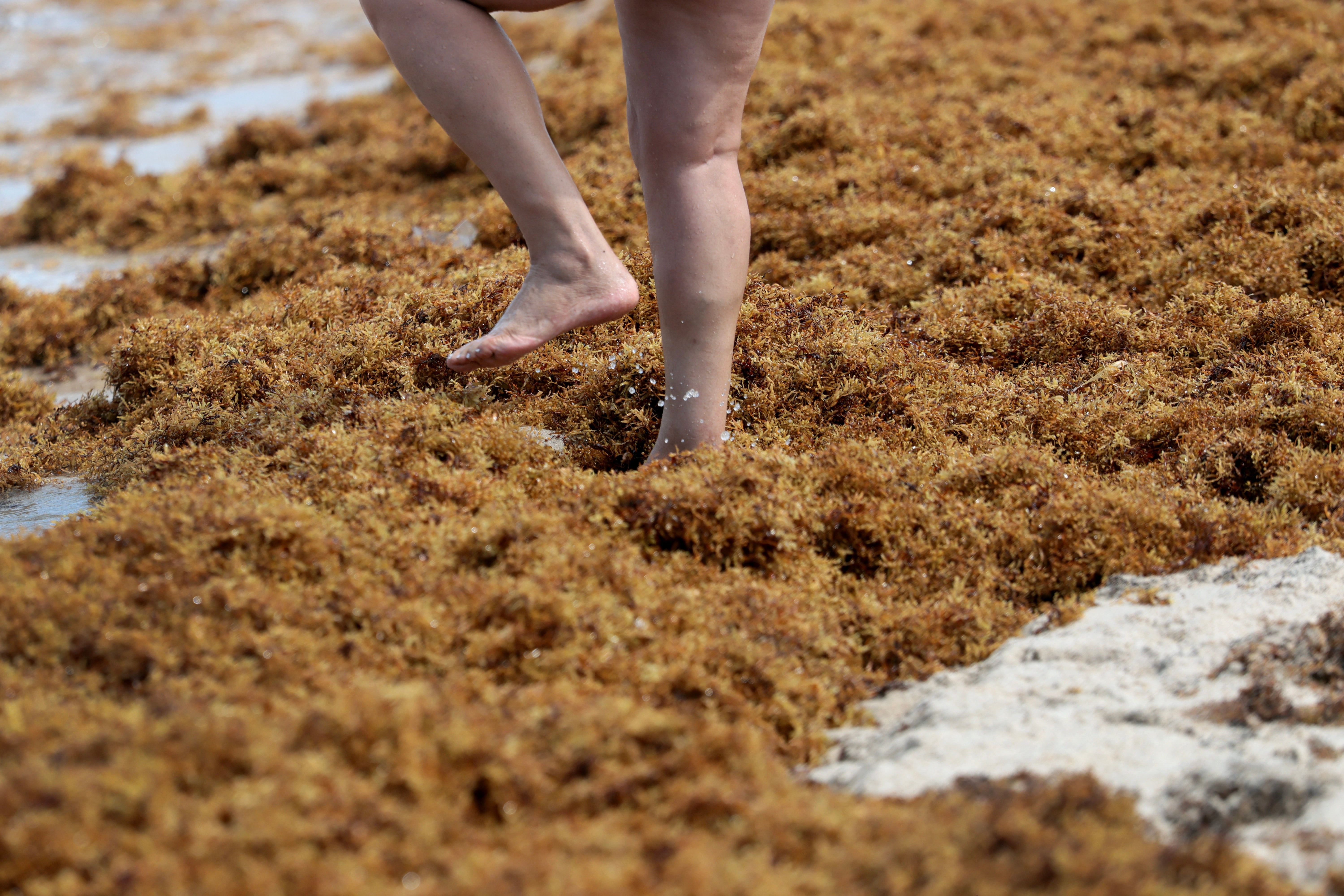
Sargassum emits hydrogen sulfide as it rots on beaches, which creates a rotten egg stench. The seaweed itself can’t hurt your skin, but the small creatures that live in it often cause skin rashes and blisters, according to the Florida Health Department.
The hydrogen sulfide can irritate beachgoers’ eyes, noses and throats, and those with asthma or other breathing problems may be particularly sensitive. Florida’s health officials have warned that beachgoers should avoid touching or swimming near the seaweed, and to use gloves if it has to be handled.
Sargassum isn’t all bad, either.
The seaweed helps keep Florida’s shorelines “resilient” because it provides essential nutrients and helps replenish areas suffering from erosion due to hurricanes and storms, according to the Miami-Dade County Parks, Recreation and Open Spaces Department.