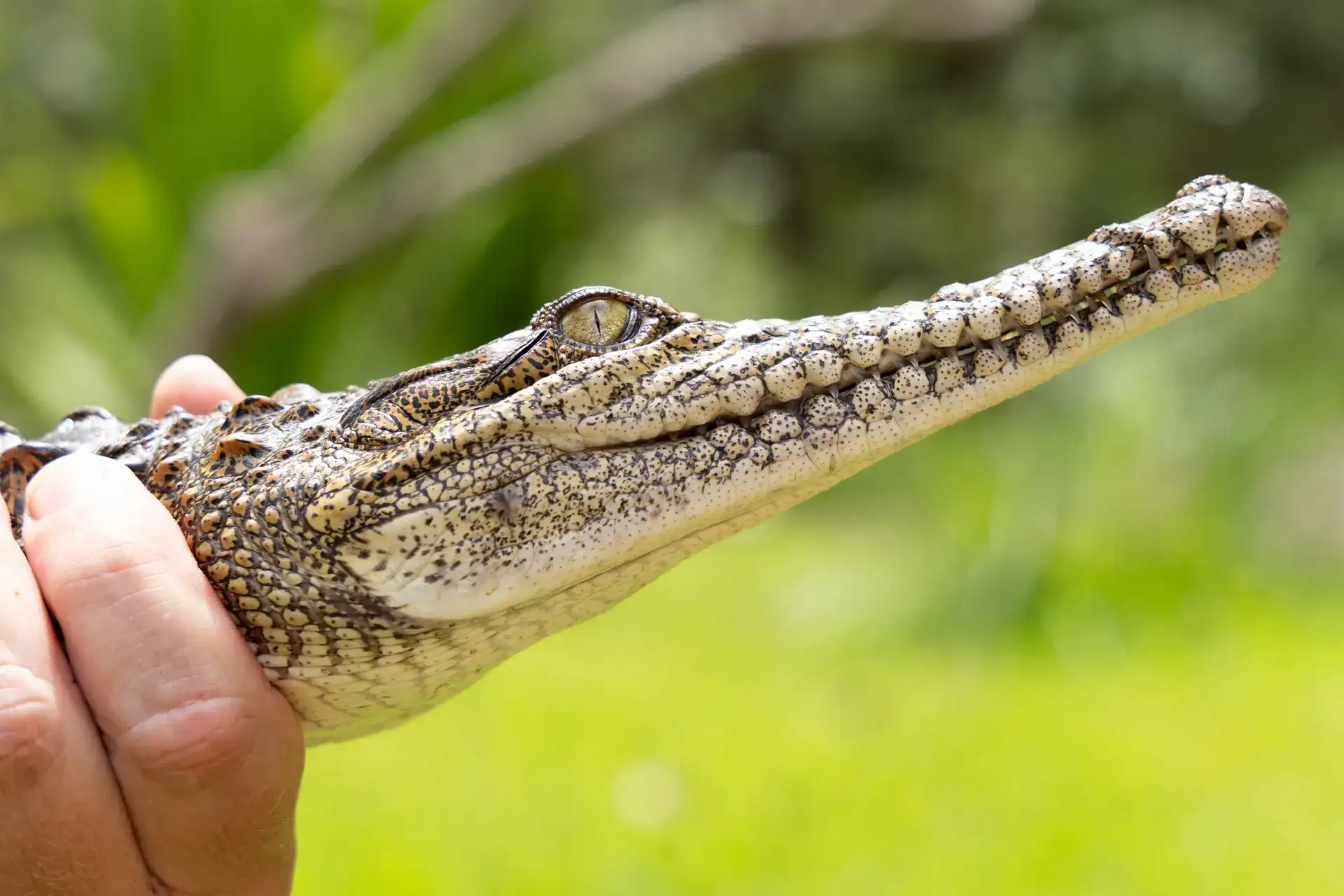
How did crocodiles survive the asteroid that wiped out the dinosaurs? The answer to a simple yet fascinating question posed by a five-year-old in Western Australia sheds light on the remarkable traits and survival abilities that helped crocodiles outlast one of the deadliest events in Earth’s history.
According to the online platform The Conversation, Mike Lee, a professor in evolutionary biology (jointly appointed with the South Australian Museum), Flinders University, explained that crocodiles survived for two main reasons. First, they can go for long periods without food. Second, they lived in habitats that were among the least affected when the asteroid struck Earth.
Roughly 66 million years ago, Earth was dominated by dinosaurs, until a massive asteroid, measuring more than 9 kilometers wide, crashed into the shallow waters near what is now Mexico. The impact triggered an enormous explosion, unleashing global earthquakes, tidal waves, bushfires, and even poisonous rain.
What made matters worse was that the asteroid is believed to have hit at one of the worst possible places, where the rocks could easily be “exploded” (or vaporized), throwing up a huge quantity of dust into the sky, blocking out the sun for many months, and sending Earth into a long, dark, and freezing winter.
As sunlight disappeared, green plants died off first. The plant-eating animals that survived on those plants died next, followed by the meat-eaters that depended on them for food.
How did crocodiles survive?
Scientists and experts strongly believe the answer lies in evolution and the ability to adapt quickly to changing environments, one of the key reasons crocodiles survived the extinction event that wiped out the dinosaurs, according to BBC.
In today’s world, these prehistoric species, often described as 'living fossils,' live in lakes and swamps, but researchers claim that they evolved quickly and could live happily on land or in the sea.
A study conducted by a team of scientists from the University of Bristol and Harvard University, which examined more than 200 skulls and jaws belonging to crocodiles and their extinct relatives, reportedly found that highly diverse ways of living evolved at a remarkable pace, allowing extinct crocodilian species to rapidly thrive over millions of years.
Stephanie Pierce, associate professor of organismic and evolutionary biology at Harvard University, said, "Ancient crocodiles came in a dizzyingly [sic] array of forms. They were adapted to running on land, swimming in the water, snapping fish, and even chewing plants," as quoted by the BBC. “Our study shows that these very different ways of living evolved incredibly fast, allowing extinct crocodiles to rapidly thrive over many millions of years," she added.
Slow breathing and low energy use helped crocodiles survive
Crocodiles were able to survive the asteroid impact largely because their bodies require very little energy. According to Professor Lee, they spend much of their time resting, breathing slowly, and have an unusually slow heartbeat, which allows them to stay underwater without breathing for more than an hour.
Their low energy needs also enable them to survive without food for months and, in some cases, for more than a year. This would have been a major advantage after the asteroid struck, when food sources, including other animals, became scarce. Dinosaurs, by contrast, were generally far more active and therefore needed much more energy, especially meat-eating species such as Velociraptor. Once food disappeared, they likely would have died much more quickly.