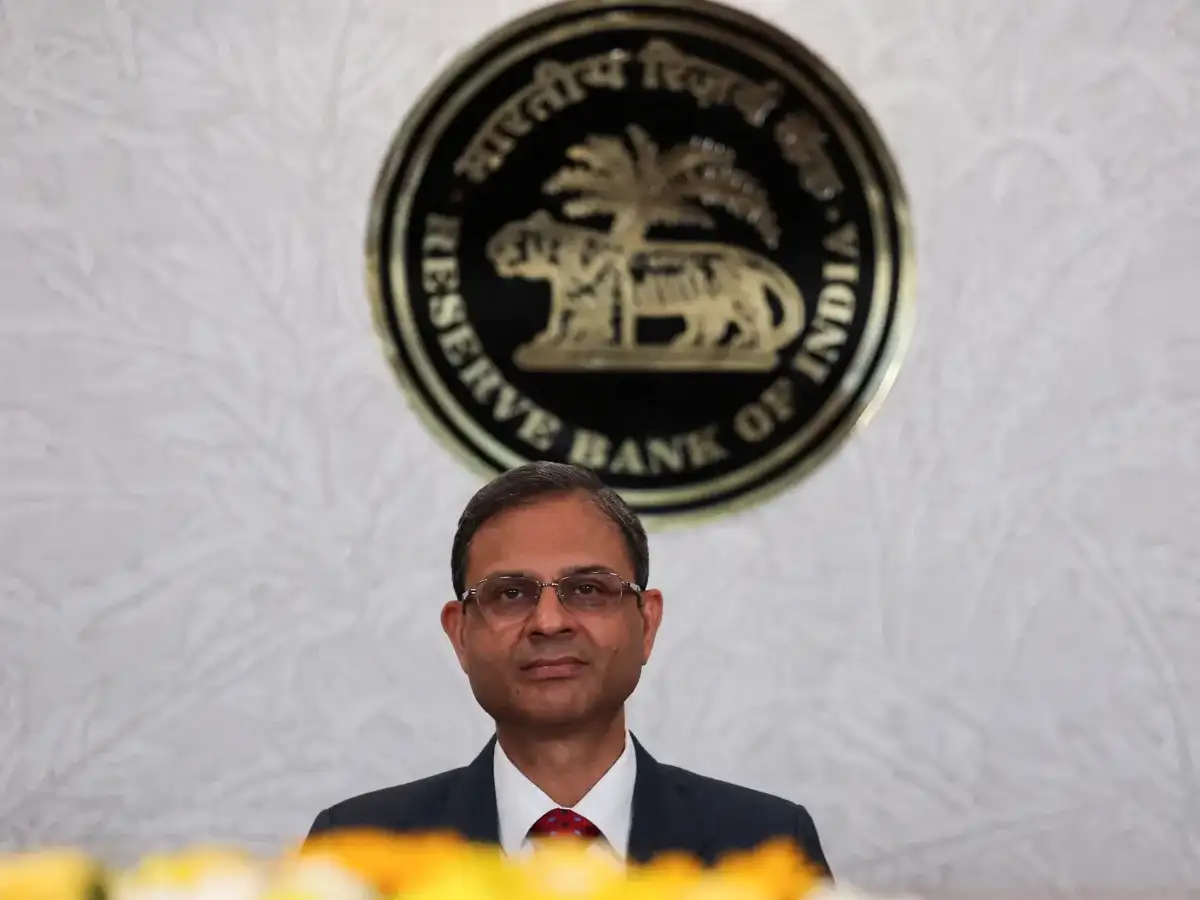
New Delhi: Reserve Bank Governor Sanjay Malhotra has said the central bank is closely monitoring developments in West Asia and that it would be premature to talk about a rate hike at this stage.
"If we actually wanted to prepare them (market) for this (rate hike), then we would have changed our (stance)..., if it was so certain that we are going to hike in the coming months, then we would have changed the stance from 'neutral' to 'restrictive', right? We did not do that," he told ET Now.
"So, I think it will be premature to talk about a rate hike. What we have said is that we are cautious, we are aware that there could be risks, both on inflation, as well as on growth, especially inflation, because it is hitting the upper band...we are cautious, and we will continue to remain data dependent," he said.
Earlier this month, the RBI kept its benchmark repo rate unchanged at 5.25 per cent amid growing risks to growth and inflation from the prolonged West Asia conflict, elevated energy prices and global supply-chain disruptions.
The Monetary Policy Committee (MPC) unanimously voted to leave the policy repo rate unchanged at 5.25 per cent, and continue with its "neutral" stance.
The RBI lowered its growth expectations for the current fiscal year, projecting real GDP growth at 6.6 per cent in 2026-27, below the 6.9 per cent April forecast. The projection is also lower than the 7.6 per cent estimated for 2025-26.
It forecast inflation to rise to 5.1 per cent in 2026-27, with price pressures expected to peak at 5.9 per cent in the third quarter before easing. This compares to the previous projection of 4.6 per cent average retail inflation for the year. Core inflation is expected at 4.7 per cent, up from the earlier projection of 4.4 per cent.
Observing that the de-escalation in the West Asia conflict is a big positive for the whole world and also for the Indian economy, Malhotra said it is good news both for growth and inflation.
Besides, he said, crude prices have moderated, and urea prices have also plummeted, providing comfort to the Indian economy.
Stressing that the Indian economy is resilient, he said, "The government and the OMCs (Oil Marketing Companies) together cushioned the impact of the energy shock to a great extent, and all high frequency indicators show that India has weathered the shock quite well in very uncertain times".
"And as we said, in our monetary policy, we are in wait-and-watch mode. Let's see how long this truce continues and better times ahead for all of us," he said.
While acknowledging that risks have moderated, he cautioned that policymakers were not yet ready to draw definitive conclusions on the inflation outlook.
"Upside risks have certainly reduced, but we'll have to...wait and watch as to where crude prices ultimately end up," he said.
On inflation, the governor said the RBI was closely monitoring whether fuel-led wholesale price pressures spread to the broader economy.
"We are not sure, frankly, as to whether we will have second-round effects or not. If you were sure, the monetary policy committee would have acted," he said.
As of now, he said, the central bank does not see evidence of inflation becoming generalised.
Apart from crude oil prices, the RBI is also tracking the progress of the monsoon, which could influence the inflation trajectory in the coming months.
"Both are uncertain. Both have consequences for inflation. And so we'll be watching...both," Malhotra said.