
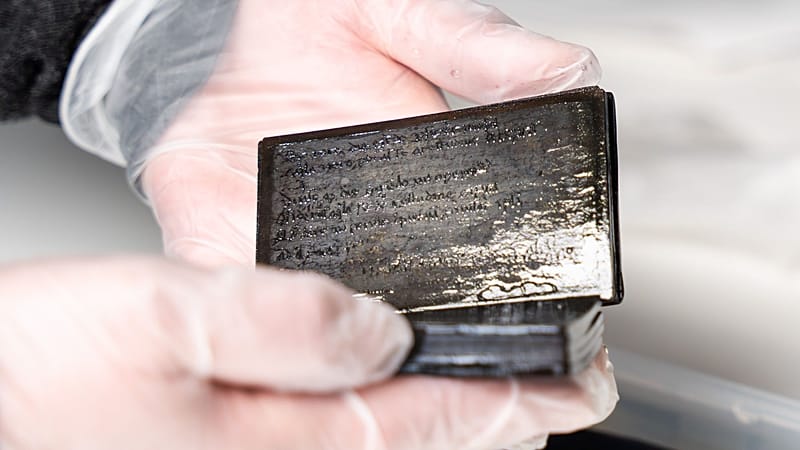
The excavations were carried out in connection with the construction of a new administrative building in the North Rhine-Westphalian city of Paderborn. During the work, archaeologists supervised by the regional association of Westphalia-Lippe (LWL) discovered the notebook in one of five medieval latrines that had been exposed.
Dr Barbara Rüschoff-Parzinger, the LWL’s head of cultural affairs, stresses that this is a unique find and adds: "Unusual as it may sound, latrines are often extremely rich sources of finds for archaeologists."
The object, which is around 700 to 800 years old, measures just 10 by 7.5 centimetres. It consists of wooden tablets coated in wax, protected by a leather cover embossed with a lily motif. In the Middle Ages, a stylus was used to scratch notes into the wax layer, which could later be erased and written over.
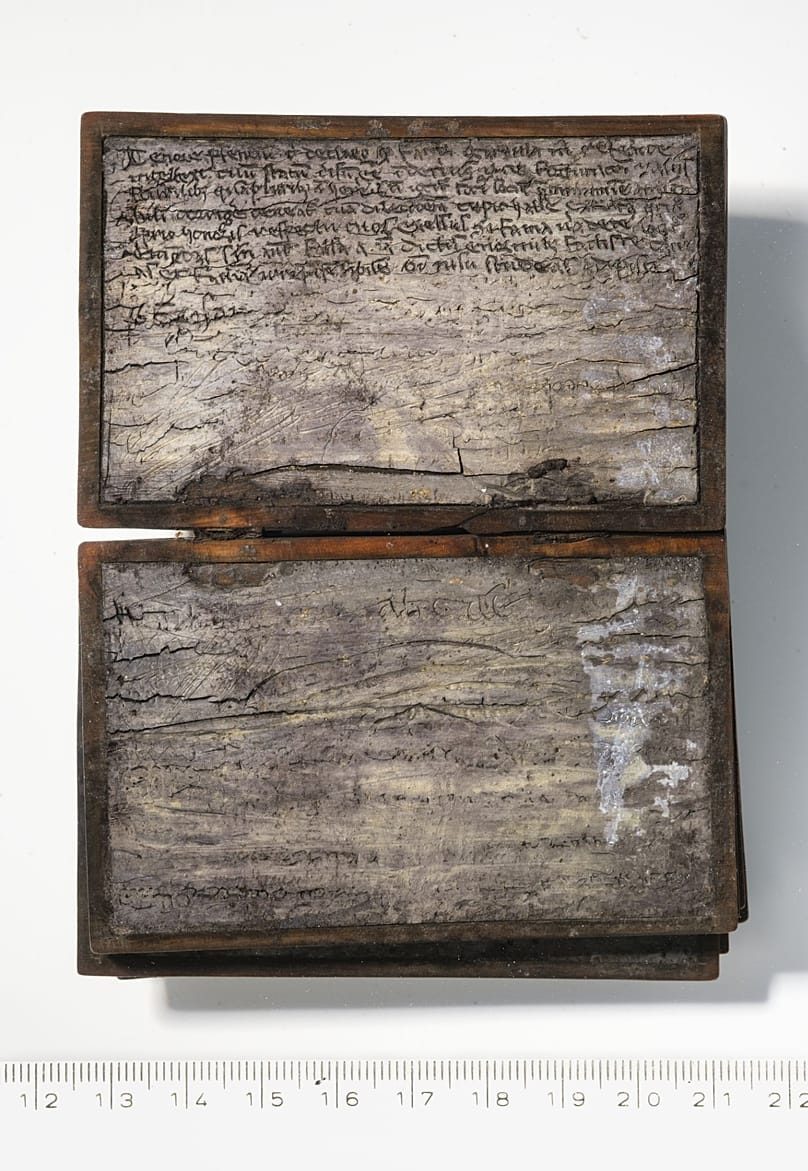
The notebook comprises ten pages, eight of which are written on both sides. According to the archaeologists, the text is in Latin and appears to have been written by a single hand.
In the Middle Ages, the centre of Paderborn was home mainly to affluent citizens and merchants. At the time, traders were among the few members of medieval society who could read and write.
Silk probably used as toilet paper
Another clue to the social status of the latrine users are fragments of silk fabric, which may have been used as toilet paper.
Paradoxically, the notebook owes its remarkable state of preservation to the place where it was discarded. The airtight, damp and low-oxygen environment of the latrine prevented the organic materials from decaying.
LWL conservator Susanne Bretzel said the find initially appeared rather inconspicuous: "Enclosed in a clump of wet earth and barely recognisable at first, the object only became visible during cleaning in our restoration workshop in Münster," she said. "Even after so many centuries in the ground, the latrine find still had a distinctly unpleasant odour."
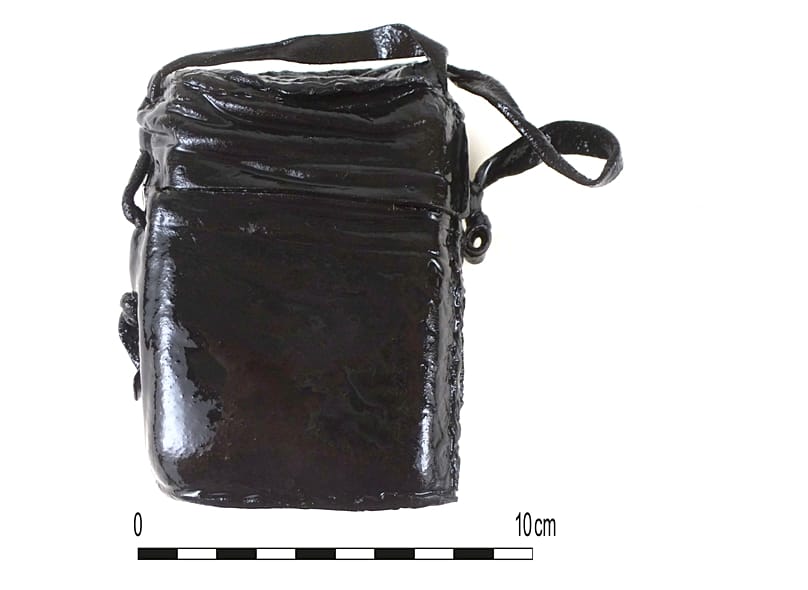
The pages inside were tightly pressed together, which protected the wax layers from dirt and deformation. According to Bretzel, the wooden tablets have not warped, so the writing is still clearly legible.
The conservation work is expected to take up to a year. Scientists are currently examining the materials used in the object, including the wax, possible resin components, pigments and the types of wood. Until the analyses are complete, the organic components are being stored in distilled water.
Once the analysis is complete, the researchers plan to decipher the content of the notes.
This text was translated with the help of artificial intelligence. Report a problem : [feedback-articles-en@euronews.com].