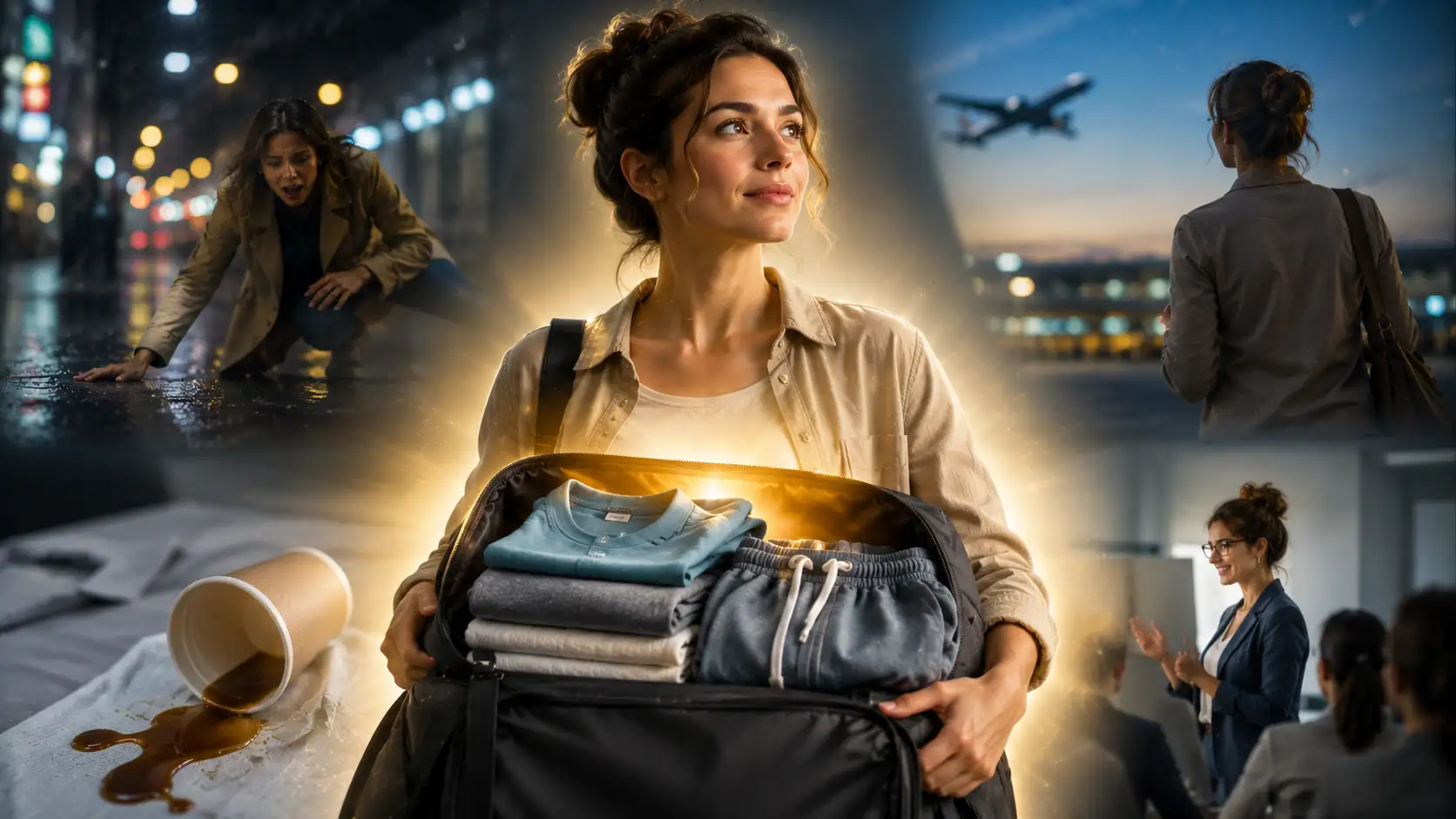
Everyone knows someone who does it. Before leaving the house, they check their bag one last time. Wallet? Phone? Keys? And surprisingly, a fresh pair of clothes. It may be an extra shirt, socks, workout clothes or even a complete change of outfit. At first glance, it may seem excessive. But psychology suggests this habit may be doing much more than preparing for spills, sweat or unexpected weather. People who always carry fresh clothes are not necessarily overthinkers or overly cautious individuals. Their brains may simply be using preparedness as a way to create comfort, reduce uncertainty and stay emotionally regulated throughout the day. Several psychological theories help explain why.
The brain naturally seeks predictability
Humans are wired to anticipate future events. Modern neuroscience suggests the brain constantly creates predictions about what could happen next. Researchers often refer to this as predictive processing. The brain dislikes uncertainty because uncertainty requires extra energy.
Carrying spare clothes may be a way to reduce that uncertainty. A person may think:
"What if it rains?"
"What if I spill coffee?"
"What if I have an unexpected meeting?"
The brain quietly solves these problems before they happen. As a result, the individual feels calmer. The extra clothes become less about fashion and more about reducing mental friction.
Psychology says people who always carry a fresh pair of clothes may be creating an invisible safety net for their brains
The need for cognitive closure may explain the behavior
Psychologist Arie Kruglanski developed the theory called the need for cognitive closure. The concept suggests some individuals strongly prefer certainty over ambiguity. They enjoy having plans, answers and backup options. Unexpected situations can create discomfort because they introduce unanswered questions. Fresh clothes act as an immediate solution.
Instead of worrying about possible scenarios, the brain relaxes because a response already exists. For example, imagine an employee attending work, exercising afterward and then unexpectedly being invited to dinner. A fresh set of clothes instantly removes stress from the situation. The person does not have to solve a new problem in real time.
Habit loops may transform preparedness into an automatic routine
Behavioral psychology also offers an explanation. According to habit loop theory, habits consist of a cue, a routine and a reward. The cue may be leaving the house. The routine is packing fresh clothes. The reward is peace of mind. Over time, the sequence becomes automatic.
The brain begins associating preparedness with emotional relief. Eventually, forgetting the extra clothes may itself create discomfort. This is not because the clothes are essential. It is because the routine has become psychologically meaningful. The brain now expects it.
The concept of uncertainty reduction may be at work
Psychologists have long studied uncertainty reduction. Humans naturally seek information and strategies that make life feel manageable. Backup plans are one of those strategies. Extra clothes create a sense of readiness. Think about everyday situations.
A child spills juice. An unexpected rainstorm appears. A meeting suddenly becomes formal instead of casual. People carrying fresh clothes are often preparing for these possibilities. The strategy may seem small, but it gives the brain something valuable: confidence.
Enclothed cognition suggests clothing affects how people think
Clothing itself also influences psychology. Researchers Hajo Adam and Adam Galinsky introduced the idea of enclothed cognition. Their research showed that what people wear can influence their mental state and behavior. Clothing often symbolizes competence, confidence and identity. Some individuals feel uncomfortable if they believe their appearance no longer matches the situation around them.
Fresh clothes allow them to quickly restore that alignment. For example, many professionals keep an extra shirt at work for important meetings. Athletes carry spare clothes after training sessions. Travelers often pack emergency outfits. The behavior is surprisingly common.
Self-regulation theory may also play a role
Psychologists describe self-regulation as the ability to manage emotions, behaviors and environments effectively. Keeping fresh clothes may be a form of proactive self-regulation. Instead of reacting after problems arise, people prepare in advance.
Research consistently shows that proactive behaviors can reduce stress levels. Preparation often creates feelings of competence. When people feel prepared, they experience greater confidence navigating unpredictable situations. The brain interprets preparation as protection.
Personality traits may influence the habit too
Studies involving the Big Five personality model suggest that people who score higher in conscientiousness often value organization and planning. These individuals tend to think ahead and prefer efficient systems.
Carrying extra clothes fits naturally into that mindset. It is similar to carrying a portable charger, water bottle or emergency medicine. The behavior becomes part of a larger lifestyle built around readiness. Of course, not everyone who carries spare clothes shares the same personality. But certain traits may make the habit more likely.
The habit may have less to do with clothes and more to do with emotional security
Psychology teaches us that everyday habits often reveal hidden mental systems. The fresh clothes are not really the story. It is about preparedness, control, and emotional comfort. People who always carry a fresh pair of clothes are not necessarily expecting disaster around every corner. Their brains may simply prefer creating small safety nets before uncertainty appears.
Sometimes, the simplest objects become invisible tools that help people feel capable, calm and ready for whatever the day brings. And for many people, that extra set of clothes is not about changing outfits at all. It is about carrying a little extra peace of mind wherever they go.
FAQs
Why do some people always plan for worst-case scenarios?
Their brains may naturally prioritize reducing uncertainty and creating backup plans.
Why does having spare clothes make some people feel calmer?
The brain often interprets backup options as a source of control and emotional security.