The National Human Rights Commission (NHRC) on Wednesday urged government officials to exercise caution in disciplinary practices, adding teachers may face legal action if they punish students in ways deemed inappropriate.
The call was made at the launch of the 2025 Human Rights Assessment Report and a seminar titled "Thailand's Human Rights Landscape: Key Issues of 2025 to 2026".
Presenting the report, NHRC chairwoman Pornprapai Ganjanarintr said Thailand has made progress in several areas in safeguarding and promoting human rights.
These include enforcement of the law against torture and enforced disappearance, stronger labour protections and measures to assist people displaced by conflict in Myanmar.
However, she said bail rights in political cases, harassment of human rights defenders and protection against refoulement needed to be addressed.
NHRC commissioner Pitikan Sithidej told the forum the treatment of suspects during arrest and detention remained vulnerable to human rights violations.
The concern came despite the introduction of body cameras and the enforcement of the Act on Prevention and Suppression of Torture and Enforced Disappearance, she said.
Ms Pitikan also warned that violations of the anti-torture law were not confined to police, military or prison officials.
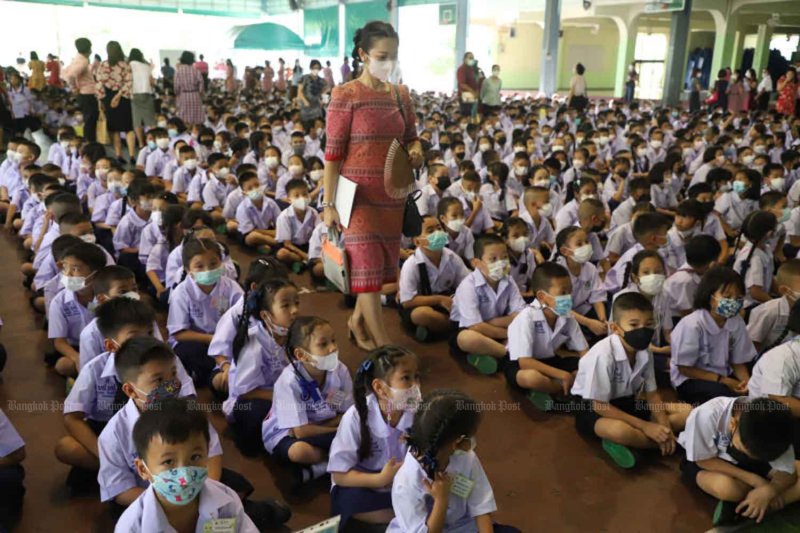
"Cases have emerged in schools, including one in which a teacher ordered a student to do 200 sit-ups as punishment, resulting in injury," she said. "Teachers may not realise that, as state officials, they can also be held liable under the law."
The commissioner proposed reviving the national justice administration development mechanism established in 2006 as the framework to strengthen cooperation on human rights protection throughout the justice process.
She said the NHRC would also work with police on a proposal to remove the names of former offenders from criminal records to improve their employment opportunities.
Other issues discussed at the forum included the impact of tensions along the Thai-Cambodian border on children's rights and Cambodian migrant workers, as well as the situation in the deep South.