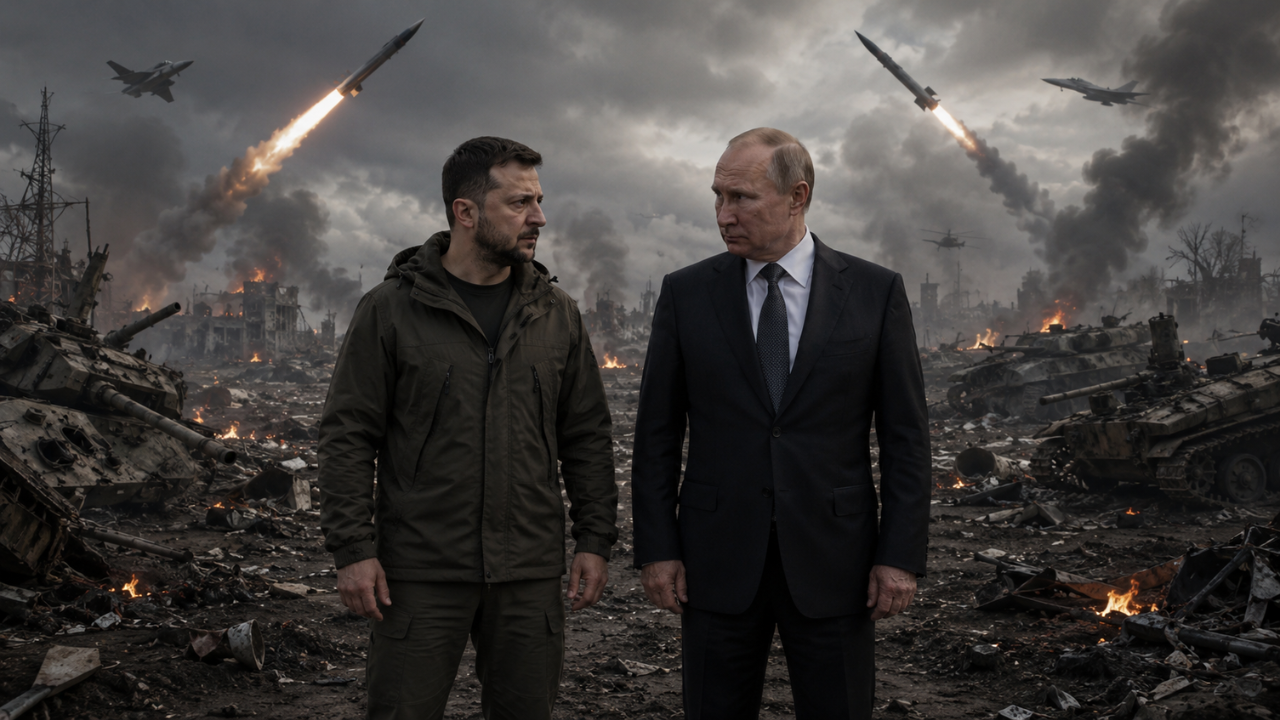
More than four years after Russian tanks crossed into Ukraine, the “special military operation” that was supposed to last a few days has reshaped the world in ways nobody fully anticipated.
Get breaking news anytime, anywhere. Download the TOI app now!
The conflict has since evolved into the largest and most consequential war on European soil since 1945..
Russia's invasion failed to break Ukraine. Yet Ukraine has not succeeded in liberating all of its territory. Nato emerged larger and more united, but Europe is less secure than it was before the war began.
Military innovation accelerated at remarkable speed, even as entire cities were reduced to rubble. Every apparent success has been accompanied by a profound cost.
More than four years on, the war's legacy cannot be measured solely in kilometres gained or lost on the battlefield. It must also be judged by what it changed beyond Ukraine's borders, from global security and energy markets to the future of warfare itself.
Here’s what the good, the bad and the ugly that world has learned from the Russia-Ukraine war:
The good
A more united Nato (minus US)
Vladimir Putin launched the invasion partly to halt Nato’s eastward expansion. It is one of history's more spectacular own goals. Russia's full-scale invasion prompted Finland and Sweden to abandon policies of military non-alignment that had lasted, in Sweden's case, for nearly 200 years. Finland joined Nato in April 2023 and Sweden followed in March 2024, making the alliance 32 members strong — its largest size ever.