Paleontologists working in northwestern China had been stuck for years on a strange puzzle. According to a new study, ‘First Non-Avian Theropod (Dromaeosauridae, Microraptorinae) from the Bird-Bearing Lower Cretaceous Xiagou Formation of the Changma Basin, Gansu Province, Northwestern China,’ published in the Annals of Carnegie Museum by Zhou et al. , a fossil site in the Changma Basin has produced the remains of more than 100 prehistoric birds.
But among those remains were clusters of broken bones crushed into pellets, similar to those coughed up by modern owls. The scene was eerily familiar: modern owls, after a meal, make nearly identical pellets, regurgitating the bones of their prey in compressed bundles. Something at Changma had been doing the same thing 124 to 120 million years ago. The trouble was, nobody could find the predator.
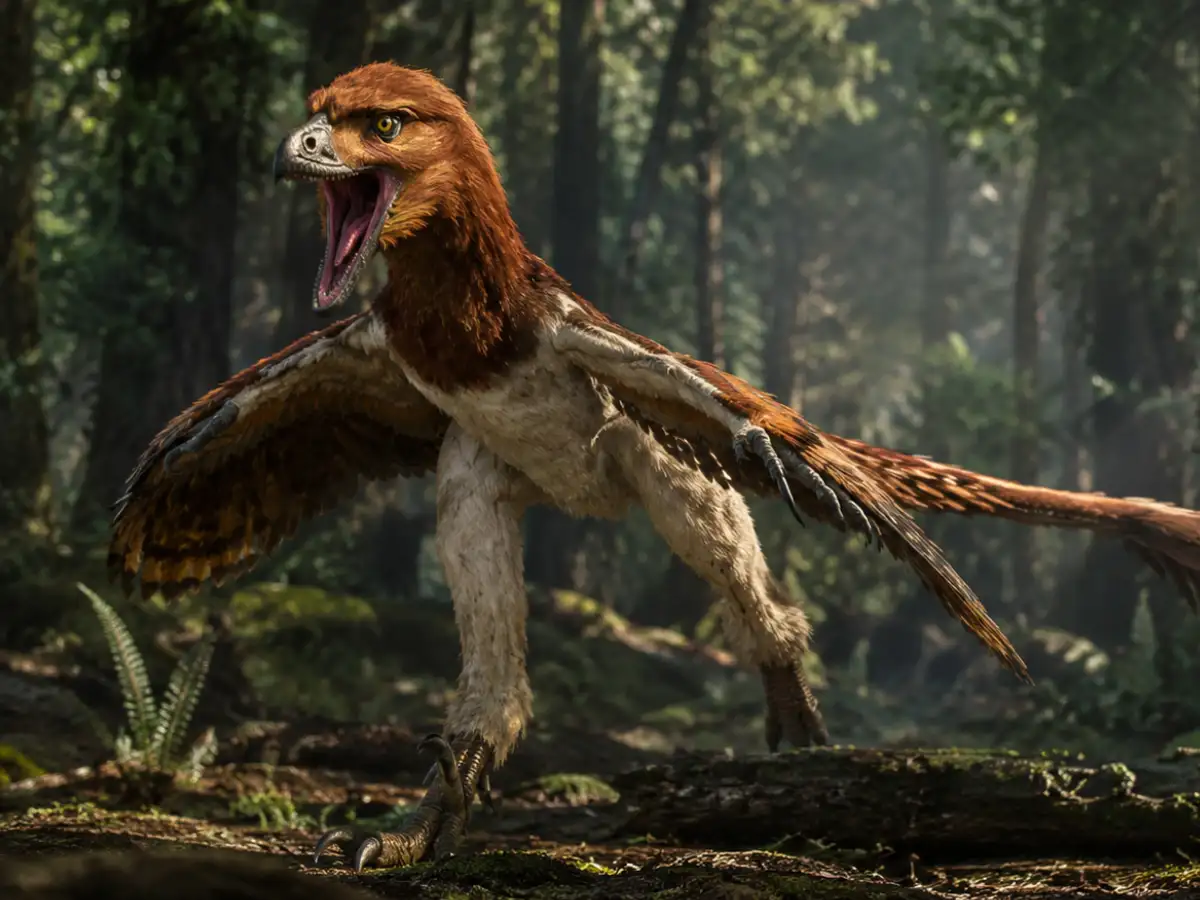
Well, now scientists may have cracked it. According to the study in the Annals of Carnegie Museum, researchers have formally described a new species of dinosaur called Jian changmaensis: a feathered, four-limbed glider and close cousin of Velociraptor. The find was led by paleontologists from Chicago’s Field Museum and Pittsburgh’s Carnegie Museum of Natural History. It was the first non-avian dinosaur found at the Changma Basin site. It may also be the predator behind those mysterious bone clusters.
A Velociraptor cousin built to glide
According to the Annals of Carnegie Museum study, Jian changmaensis was a member of a group of dinosaurs called microraptors: small, feathered dromaeosaurs that are among the closest known relatives of modern birds. The same study also found that most microraptors were small, about the size of a crow. Jian was much bigger.