
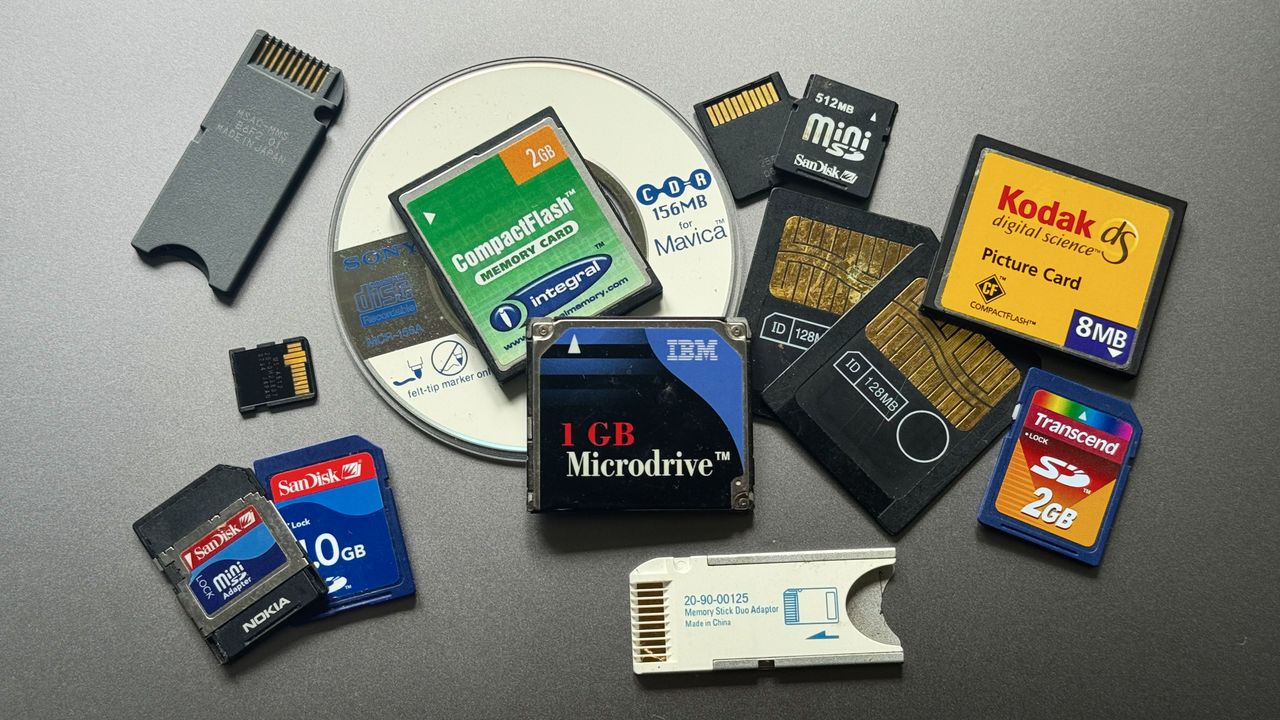
I’m so used to SD, microSD and CFexpress cards as gold standard removable media for my digital camera of choice – not to mention wireless transfer – that it’s easy to forget about all the failed physical formats previously presented to data-hungry photographers.
If you’ve taken an image with a digital camera over the past 25 years, as I have, you’ll be familiar with a roll call of formats that were once the must-have, but have now disappeared, among them SmartMedia and xD cards – both favored by Fuji point-and-shoots – along with Sony’s proprietary Memory Stick and, for more serious users with larger cameras, CompactFlash. The latter gave way to CFexpress cards and the XQD format in the 2010s, just slightly thicker than a SD card but offering much faster speeds than CF.
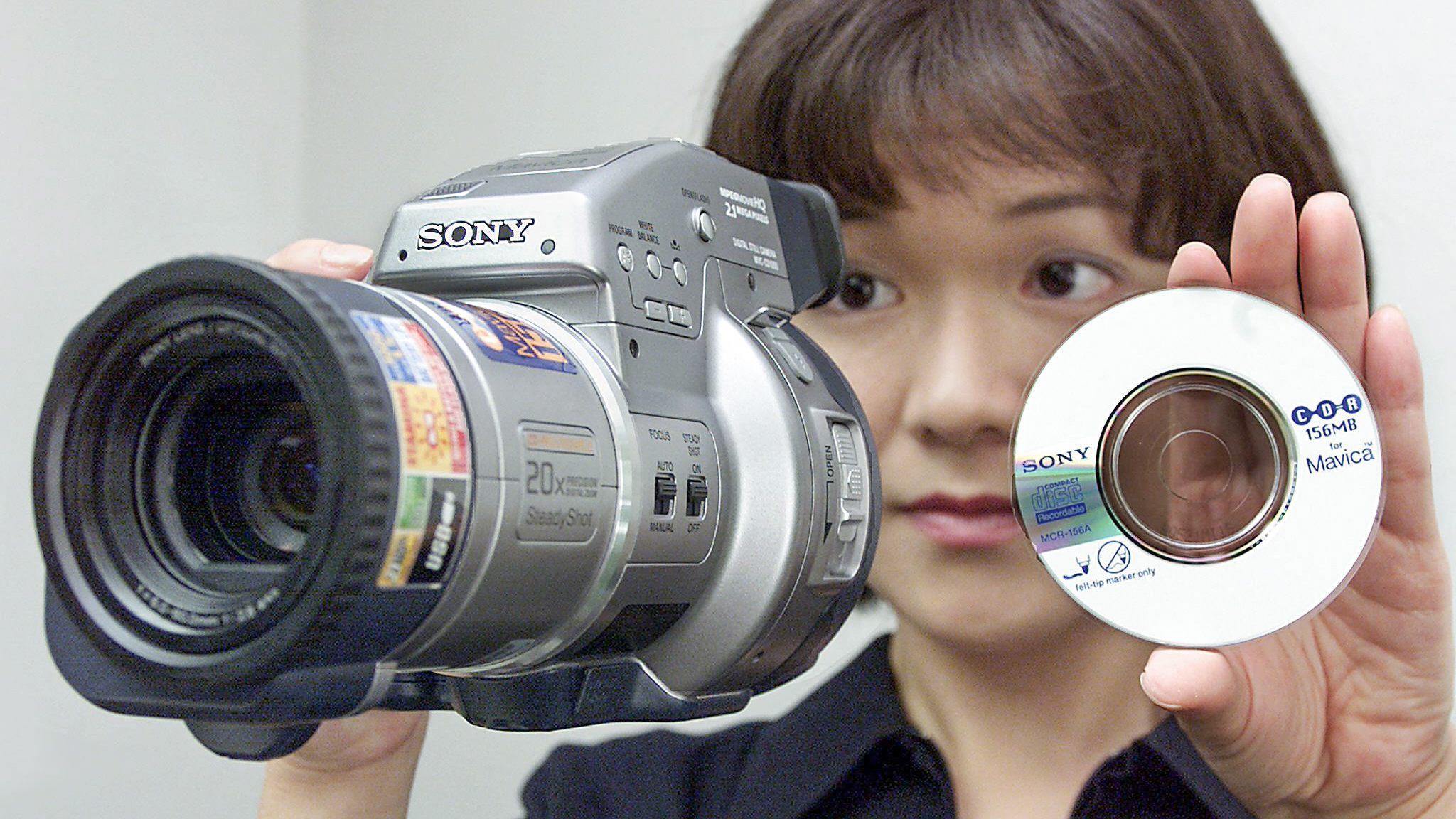
To this list of gone but unforgotten formats we can add the bonkers late 90s idea of Sony Mavica ‘compact’ cameras recording to 3.5-inch floppy disks and subsequently 8cm Mini CD-Rs. The thinking at the time was solid – circumnavigate the ‘chain of pain’ with a media format that I could take straight out of my camera and slot into my PC drive. Those nervous about the ‘newness’ of digital photography back then were presented with something familiar and unthreatening, if ultimately impractical.
First introduced in 1995, SmartMedia was one of the first digital memory formats I encountered switching from film to digital photography, intended at the time to be a flash (memory) alternative to the floppy disk. Recently reacquainting myself with a FinePix 6900 Zoom from 2001, I’d forgotten how comically huge SmartMedia looks next to SD and microSD cards today. SmartMedia’s capacity maxed out at 128MB, which quickly made it obsolete in the race for more pixels. Plus, its exposed gold contact pins and sender dimensions made the cards more fragile that what quickly came to replace them.
In my world, that replacement was the much smaller and tougher xD memory card, jointly introduced by Fujifilm and Olympus in 2002 and able to offer quite a jump in capacity. Almost a third of the physical size of SmartMedia, xD cards also enabled the cameras that supported the format – mainly from Olympus and Fuji but also several Kodak models – to themselves become more compact, and thus desirable.
However, Panasonic and SanDisk’s introduction of Secure Digital / SD, which first hit the market with a modest 8MB capacity in 2000, eventually meant that xD disappeared by 2009. In the race to accommodate larger data demands, SD spawned SDHC (Secure Digital High Capacity) in 2005, plus SDXC (Secure Digital eXtended Capacity) in 2009. As, simultaneously, camera phones were getting more sophisticated, microSD cards were launched primarily for mobile devices in 2005 and continues to be widely used 20 years on.
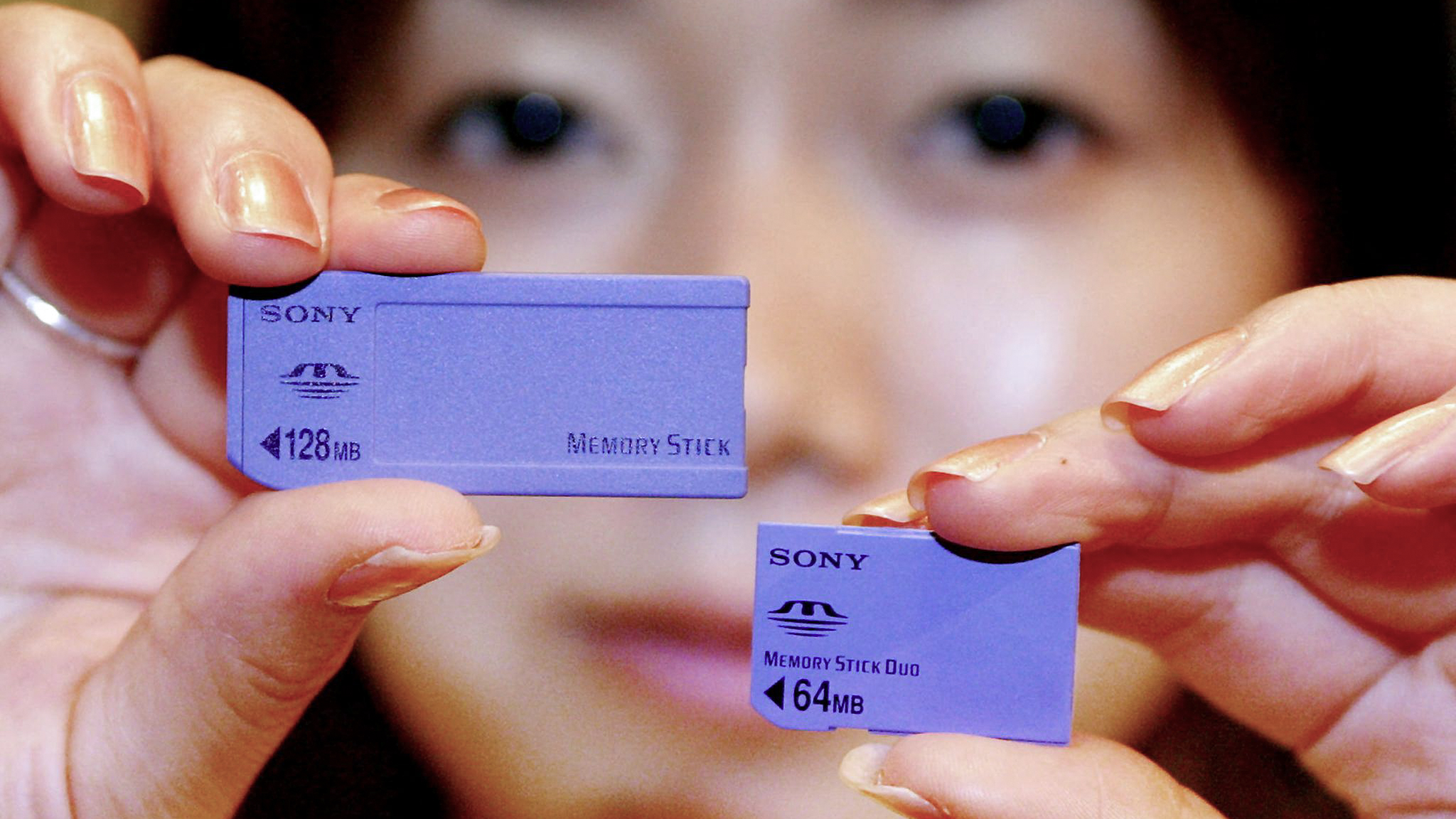
Available alongside these formats for a short while and intended as an exclusive revenue driver for Sony digital cameras, was the electronics giant’s chewing gum-shaped Memory Stick format. First introduced in 1998, by 2010 Sony was being forced to bow to consumer pressure and offer compatibility with SD cards instead. I can recall an audible sigh of relief at the time from consumers confused by all the competing formats.
Again, it was because SD offered a higher storage capacity, faster read/write speeds, plus more affordable production costs – and that unlike Memory Stick, was non-proprietary – that saw its widespread adoption and market dominance, that continues over a quarter of a century later.
Fast forward to 2026 and I’m just grateful that my card reader and laptop no longer need multiple slots to accommodate the many bewildering, but now redundant, memory card variants still rattling around in a shoebox I have at home.
Check out the best memory card options available for today's digital cameras