Europe's record-breaking heatwave left around 68,000 households without electricity in northwestern France on Wednesday, authorities said, in the country's first major power outage of the latest bout of extreme weather, as EDF shut down a nuclear reactor and reduced output at two others due to rising river temperatures.
Get breaking news anytime, anywhere. Download the TOI app now!
The outage, which involved a transformer on the electricity grid near Quimper in Brittany, was related to extreme temperatures and did not injure anyone, the prefecture in the coastal department of Finistere said in a statement. Up to 106,000 clients were left without power by late Tuesday, with full restoration not expected until the end of Wednesday at the earliest.
"For technical reasons, RTE will not be able to re-connect the affected households during the course of the day; connections will be made, at the earliest, by the end of Wednesday," the operator said.
Finistere is one of 58 French departments under the highest red alert for extreme heat on Wednesday, with temperatures of 39°C to 41°C expected from Brittany to the Paris region.
Nuclear production hit by rising river temperatures
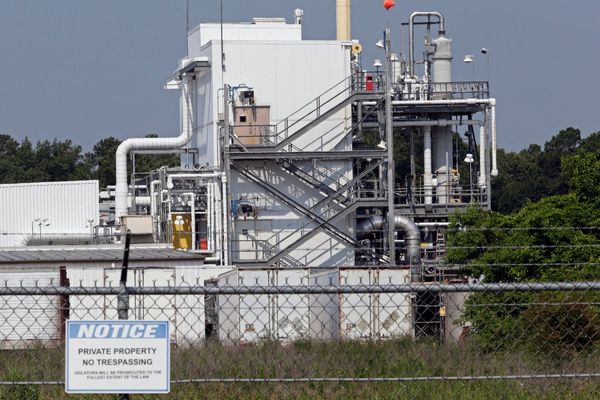
EDF shut down reactor number two at the Golfech nuclear plant in Tarn-et-Garonne on Monday night after water temperatures in the Garonne river reached 28°C, the legal limit for cooling. Output at Nogent-sur-Seine was reduced from 1,300 to 400 MW, while Bugey will see output cut from 900 to 180 MW starting Wednesday. In total, outages affect 4.6 per cent of France's installed nuclear capacity.
EDF said the shutdowns were not related to any "nuclear safety risk" but were required under environmental regulations to protect local flora and fauna. The Golfech shutdown is currently scheduled to last until June 30, depending on weather forecasts.
The French energy company also warned that the heatwave could impact production at the Blayais plant in Gironde starting Wednesday, and at the Saint-Alban plant in Isère starting Thursday. Since 2000, production losses due to high temperatures have accounted for only 0.3 per cent of annual output from French reactors, according to EDF.
During the 2022 heatwave, some plants were granted exemptions to operate even when water discharges exceeded temperature limits. At present, EDF has not submitted any requests for new exemptions, France's Nuclear Safety and Radiation Protection Authority said.
Heatwave across Europe
France recorded its hottest day on record, with the national temperature indicator reaching 29.8°C, surpassing the previous record of 29.4°C set in July 2019 and August 2003. The Eiffel Tower closed early at 4pm on Tuesday and is expected to do so again on Wednesday, while the Louvre brought forward its closing time to 4pm from Wednesday to Saturday.
The government said 1,800 schools were closed because of the heat on Tuesday, out of 8,000 schools affected. Forty people, many of them youths, have drowned since June 18, Prime Minister Sébastien Lecornu said, calling it a "tragic scourge."
Spain placed nearly all of its territory under heat alert, with red warnings in Andalusia, Cantabria and the Basque Country. Temperatures could top 44°C in some areas.
Italy declared red alerts in 15 cities including Rome, Milan, Florence, Turin and Venice, with the number expected to rise to 16 on Wednesday.
The UK Met Office issued a rare red warning for extreme heat, indicating a risk to life, with temperatures expected to reach 38-40°C in central and southern England.
Belgium saw two 17-year-olds drown in an artificial lake where swimming is banned. The Atomium monument will close early to visitors from Wednesday to Friday.
Germany reported multiple drowning incidents as temperatures approached 40°C. Poland, Croatia and Hungary issued heat warnings.
Scientists say recurring heatwaves are a clear marker of global warming and warn they will become more frequent, longer and more intense. Of the 51 heatwaves recorded in France since 1947, 34 have occurred since 2000 and 26 since 2011.
The extreme weather is being driven by atmospheric and circulation patterns that keep hot air trapped in place for days, worsened by global warming. France's weather service said the current heatwave is the second in about a month, after record-breaking temperatures in May.