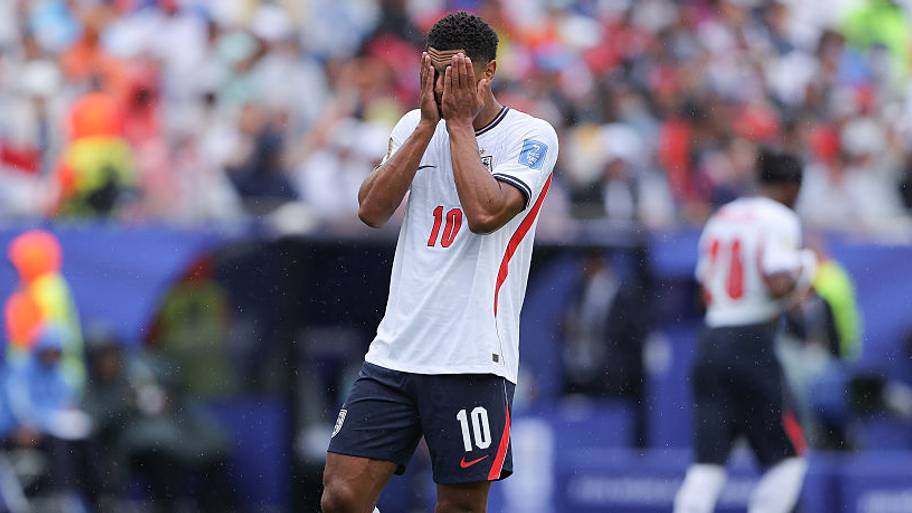
England lost the chance to qualify for the World Cup knockout rounds as Group L winners early on Tuesday night, frustrated 0–0 by Ghana at Gillette Stadium in Foxborough, Mass.
An expected victory six days after putting four goals past Croatia in Texas, combined with anything other than a Panama win in the group’s other fixture, would have been enough to guarantee first place with a whole match to spare. It didn’t happen, because England failed to replicate what it had impressively done once already at this World Cup.
England was among the big winners in the opening round of group matches. The performance against Croatia fell short of flawless, considerably better in the second half than the first, but offered significant promise as a solid foundation with room still to grow. Against Ghana, it seemed like the team took several steps backwards instead of building on a strong start.
There was even a big element of fortune, with Ghana denied what seemed a blatant penalty when Ezri Konsa wiping out Prince Adu on a breakaway strangely appeared to go unnoticed by the officials.
A place in the knockout bracket is all but confirmed with this result—four points is generally accepted to be enough to be at least among the eight best third-place finishers. But this was still a tepid reality check for the 1966 champion—in search of a first trophy in the six decades since—that could prompt several changes by the time England plays next.
Clear Lack of Threat
On paper, this was more favorable for England than the opener against Croatia. Ghana, ranked 60 places lower than Thomas Tuchel’s team by FIFA (fourth compared to 64th), was not convincing in its own opening win over Panama, forced to wait until the 95th minute to score the only goal of that match.
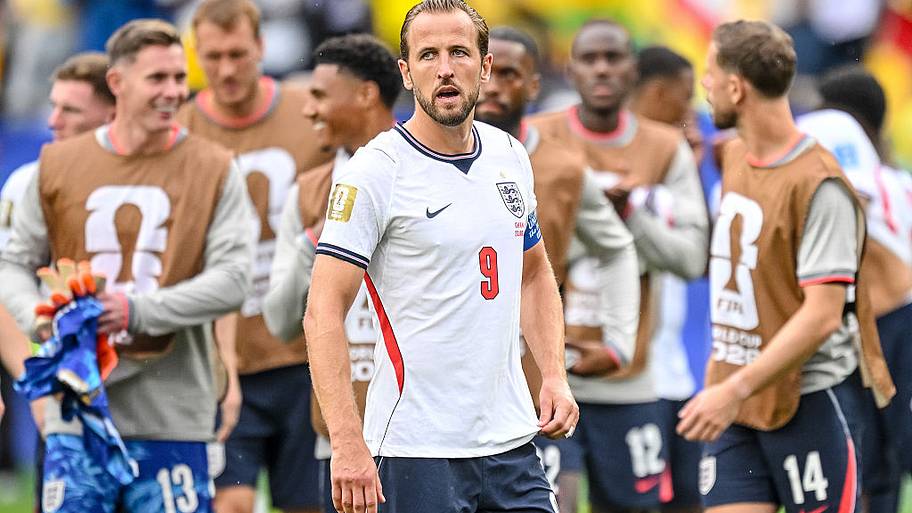
By halftime, England had controlled 78% of the ball but not registered a shot on target. Harry Kane was starved of service and Jude Bellingham couldn’t get into the match on the occasion of his record-breaking 50th senior cap. Noni Madueke was routinely frustrated on the right flank, while Anthony Gordon was virtually anonymous on the left.
Kane had noted after facing Croatia, a game in which England improved dramatically after in the second half, that the message from Tuchel at halftime had been: “Let’s just go, up the tempo.”
78.8% - England's possession figure of 78.8% against Ghana was the most on record (from 1966) by any side in a FIFA World Cup match without managing to score.
— OptaJoe (@OptaJoe) June 23, 2026
Lacklustre. pic.twitter.com/ijqSDVRZL0
Into the second half in this match, an animated Tuchel was increasingly frustrated and angry that he wasn’t seeing the same message applied. Perhaps because of proximity on the nearside, Djed Space and Gordon seemed to be getting the brunt of that tirade and then suddenly combined—11 minutes into the second half—to give England its best moments up to that point. It resulted in the ball moving faster, making its way to Bellingham on the far side of the penalty box. The shot was blocked, before Gordon fired the rebound towards goal and drew the first save of the match from goalkeeper Benjamin Asare.
The upturn was brief and Spence and Gordon were soon the first England players withdrawn. In the end, a flurry of pressure towards the end of the stalemate came too little too late.
“You’ve got to find solutions,” Declan Rice shrugged in discussion with BBC Sport postgame, handing credit to Ghana for a defensive shape that proved impossible to pick holes in.
Panama Handed England Blueprint
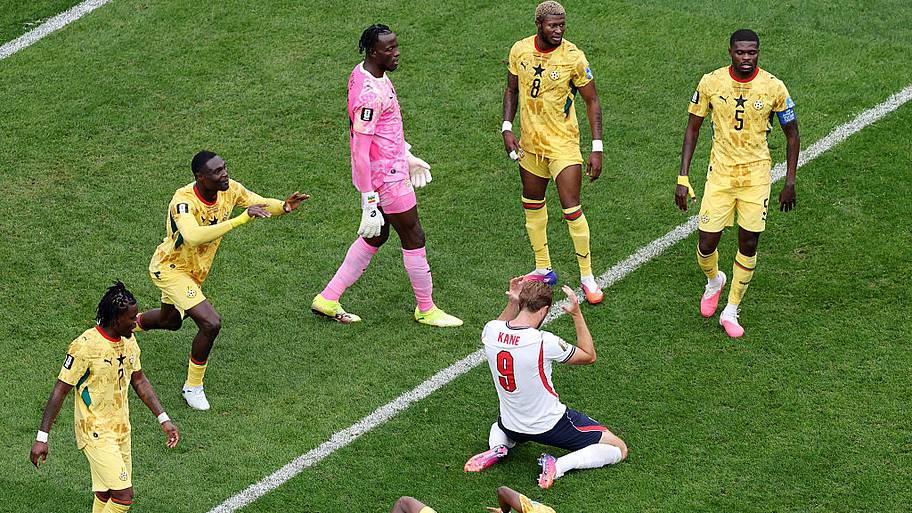
In terms of the result and performance alone, it wasn’t disastrous for England. The bigger issue is that Ghana may have shed light on limitations that others could now look to exploit.
England has Panama up next, an opponent thrashed 6–1 when the pair last met at the 2018 World Cup, and will likely to take a leaf out of Ghana’s book rather than attempt to go toe-to-toe with a technically superior team. If England struggles against a low block, there could be a knock-on effect further down the line once the knockout rounds begin.
There are plenty of well-organized teams in this tournament that this version of England—rather than the one that faced Croatia—could struggle against.
From an England perspective, Gordon, Madueke and Spence might not be starting the Panama contest at MetLife Stadium. Bukayo Saka, Marcus Rashford and Nico O’Reilly all made a more direct and positive impact in short cameo appearances than the three starters did in far longer.
Saka would likely have been starting already but for an injury that impacted the final stages of his club season with Arsenal. But he’s been declared fit to begin the next match. Although operating at left back, O’Reilly hit the bar, while Rashford also showed signs of threat in only seven minutes.
Weather Makes a Mockery of Hydration Breaks
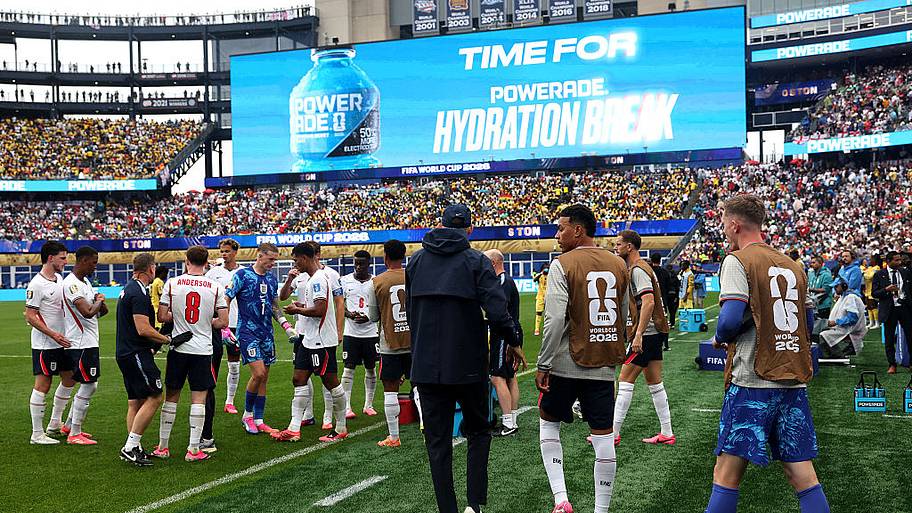
FIFA’s mandatory hydration breaks have already drawn criticism at this World Cup. While the original motive is important for player wellbeing and safety when exposed to the typical heat of the North American summer, the use of such breaks for extra commercials during TV broadcasts has left plenty of fans with a sour taste in a World Cup that already feels too much about making money.
Purists also don’t like the idea soccer suddenly resembling something akin to a four-quarter sport, with complaints about losses of momentum midway through a half.
FIFA insists it must be the same across the board for the purposes of integrity. But it doesn’t always feel necessary and this match—another involving England—was one of those. The Three Lions beat Croatia last week in the climate-controlled setting of AT&T Stadium. In this one, the early evening temperature at Gillette Stadium didn’t break 70°F, with conditions rainy and overcast.
Declan Rice could be seen shaking his head as the players were asked to stop for a drink in the first half, perhaps partly also because there had moments earlier been a significant pause for an injury and the game had not long restarted. Everything seemed quite forced and inflexible.
The break midway through the second half was more tactically helpful than anything else and England looked more like scoring in the final 20 minutes than in the previous 70.
But it felt ironic that the highest temperature recorded in England on Tuesday almost hit 95°F, with 100°F forecast before the week is out as Europe’s current heatwave continues.
At Euro 2028 in two summers’ time, UEFA will assess hydration breaks on a game-by-game basis.