A Fox News medical analyst's decision to call America's record low teen birth rate a 'problem' has triggered fierce criticism and reopened a fraught national debate about fertility, family planning and how statistics are framed on live television.
Dr Marc Siegel, the network's senior medical analyst, made the comment on the edition of America's Newsroom while discussing fresh federal data on declining births. His remarks about Americans aged 15 to 19 spread rapidly online, where critics accused him of lamenting fewer teenage pregnancies.
The episode has since become a flashpoint in the wider argument over how reproductive data is read across the political spectrum.
Record Low Births And The Numbers Behind Siegel's Remark
On 9 April 2026, the CDC's National Center for Health Statistics published its provisional 2025 birth report, confirming another fall in births across the country. The agency recorded 3,606,400 births last year, down 1% from 2024. The general fertility rate slipped to 53.1 births per 1,000 women aged 15 to 44, also a 1% decline.
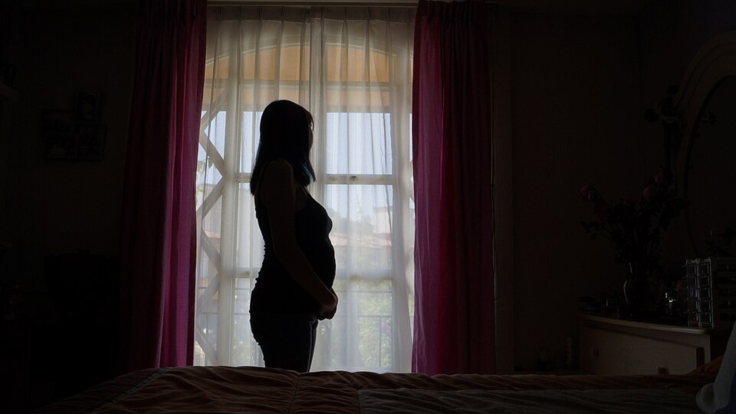
The teenage figures were starker. According to the full report from the National Vital Statistics System, the birth rate for those aged 15 to 19 fell 7% to 11.7 births per 1,000, another record low for the group. The rate for younger teenagers aged 15 to 17 dropped 11% over the same period.
The historical scale is striking. The same age group recorded 61.8 births per 1,000 in 1991, meaning the rate has now fallen by more than 80% since that peak. NPR, which interviewed the report's lead author, reported that nearly 126,000 babies were born to mothers aged 15 to 19 last year.
Brady Hamilton, the statistician who led the analysis, told the broadcaster that the 7% decline was 'really quite extraordinary,' NPR noted that in the early 1990s more than 500,000 babies were born to teenagers in that age band every year, underlining how far the rate has fallen across a single generation.
What Was Said On America's Newsroom
Siegel appeared alongside anchor Dana Perino, who introduced the figures and said the numbers 'might feel a little shocking.' According to a transcript of the segment, Siegel began by noting that the country still records 3.6 million births a year before turning his attention to younger Americans.
Fox News complains about low teen pregnancy rates:
— FactPost (@factpostnews) June 23, 2026
"The problem is teens and young adults. From ages 15-19, the fertility rate is down 7%" https://t.co/Pg7O1J43Pq pic.twitter.com/va2HSOpg3g
'But the problem is teens and young adults from ages 15 to 19, the fertility rate is down 7%, and it's down 70% over the last two decades, meaning we're telling people that are young not to have babies, to wait until they're in a more stable life situation,' he said during the broadcast. He added that some young people 'haven't found the right partner' and were delaying parenthood into their thirties.
The analyst then widened his point to the national picture. 'Dana, people are having kids in their 30s now, not their 20s,' he continued, before citing a replacement rate of 1.56 children per couple, below the level demographers say is needed to keep the population stable. He framed the broader fall as a demographic concern rather than a comment limited to teenagers.
Backlash, Context And A Disputed Framing
The clip spread quickly, with many viewers arguing that falling teen pregnancy is a public health success tied to contraception, sex education and changing social norms. A common complaint was that Siegel referred to 'fertility' when the federal data measured birth rates, two distinct things. Critics said the slip risked dressing up a recorded social gain as a crisis.
Public health researchers have long treated the long decline as a positive trend, linking it to wider access to contraception, later sexual activity and improved education for young people. Teenage parents in the United States face well documented economic and health disadvantages, and a lower rate is generally read as easing that burden. Set against that backdrop, describing the same drop as a 'problem' struck many viewers as a jarring reversal of the usual framing.
Not everyone agreed with the outrage. Some who watched the full segment argued that Siegel used the 15 to 19 figure as evidence that Americans are starting families later in life, rather than as a plea for more teenage pregnancies. He spent much of the appearance discussing delayed parenthood, advances in supporting later pregnancies and environmental factors affecting fertility. The framing therefore remains genuinely contested.
The data itself is not in dispute. Hamilton, the report's author, cautioned that historically low teen birth rates should not lead policymakers to assume that support for young parents is any less urgent. That note sits awkwardly beside a televised reading of the same numbers as a national worry, and the gap between the two is exactly what sent the segment viral.
One set of figures, two irreconcilable readings, and a reminder that on cable news the framing can travel further than the data.