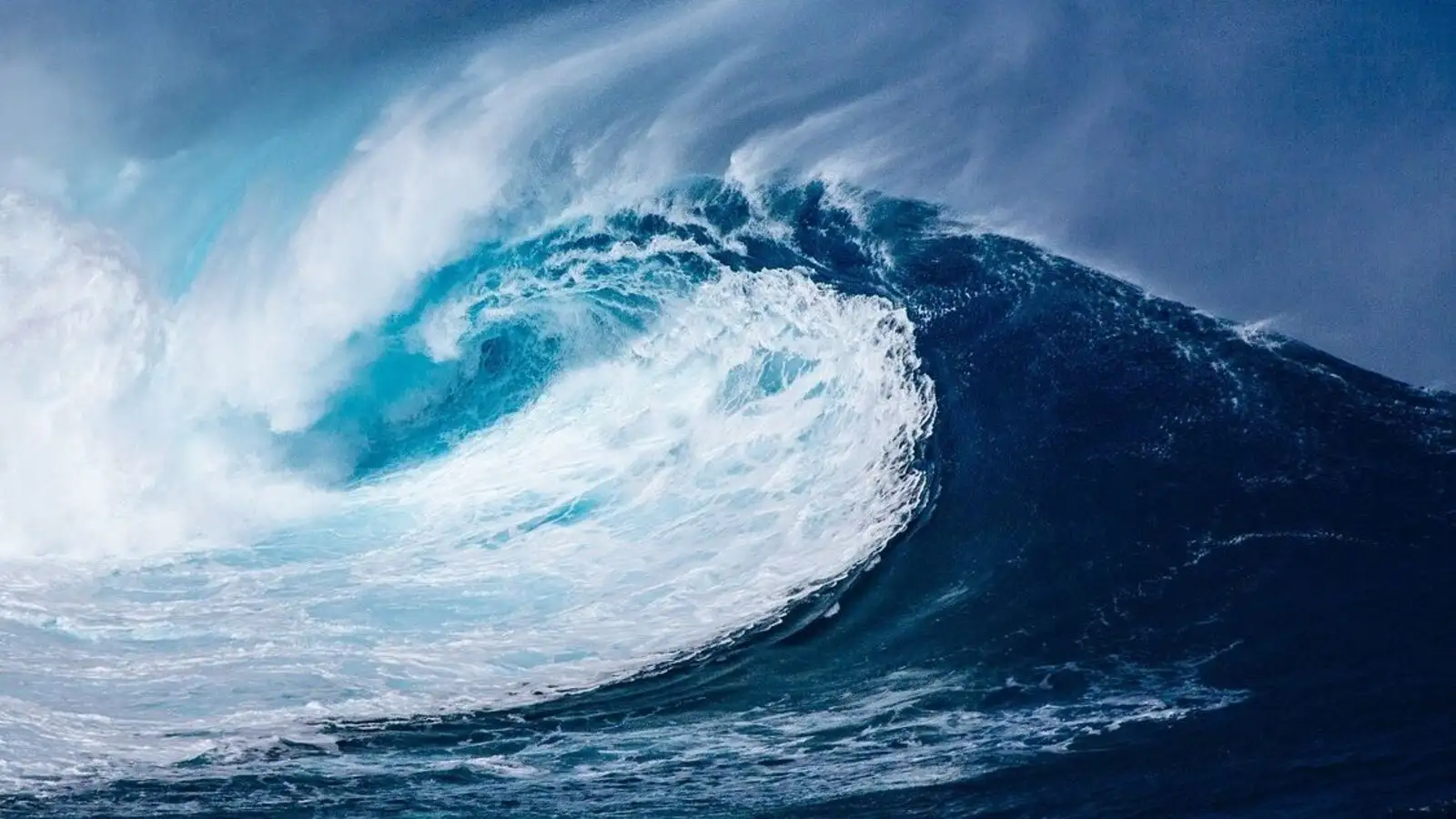
A Greenland megatsunami stunned scientists in September 2023 when a massive wave created a mysterious signal that traveled through Earth for nine days. The event was not caused by a typical earthquake, yet seismic stations across the planet recorded a slow, repeating pulse every 92 seconds. The strange rhythm forced researchers to investigate a hidden force deep inside a remote Arctic fjord.
The answer came from Dickson Fjord in East Greenland, where a huge rock and ice avalanche collapsed into the water. The impact generated a Greenland megatsunami estimated to reach nearly 650 feet high. Unlike ordinary ocean waves that quickly lose energy, this wave became trapped between towering fjord walls and continued moving like water inside a giant natural container.
The discovery revealed something remarkable about Earth’s changing landscapes. A single mountain collapse in a distant Arctic region was powerful enough to make the entire planet “listen.” Scientists used satellite observations, seismic data, and advanced modeling to understand how the Greenland megatsunami kept sending vibrations through the ground.
The event also raised bigger questions about climate change and Arctic safety. As glaciers retreat and frozen landscapes weaken, areas once considered stable may become more vulnerable. The Greenland megatsunami was not just a rare natural event; it was a warning about how rapidly the Arctic environment is transforming.
How did the Greenland megatsunami create a signal heard around the world?
On September 16, 2023, around 880 million cubic feet of rock and ice broke away from a mountainside near Dickson Fjord. The collapse sent enormous debris into the water, creating a Greenland megatsunami that changed the quiet Arctic landscape within seconds.
The impact was so powerful that the wave rushed through the narrow fjord instead of spreading freely into the ocean. The surrounding cliffs acted like walls, trapping the water and forcing it to move repeatedly from one side to another.
This unusual movement created what scientists call a seiche. A seiche is a standing wave that continues oscillating inside a confined water body. It is similar to the movement of water after a person bumps a full bathtub.
The Greenland megatsunami became a giant version of that effect. The water repeatedly pushed against the fjord floor, transferring energy into the Earth. Sensitive seismic instruments thousands of miles away detected the steady vibration.
Satellites reveal the hidden power of the Greenland megatsunami
The breakthrough came from satellite technology that allowed researchers to observe changes in the fjord’s water level. Traditional measurements often struggle in remote Arctic regions, but new satellite systems provided a clearer picture of what happened after the collapse.
The Surface Water and Ocean Topography satellite helped map the water surface inside Dickson Fjord. The satellite detected significant differences in water height after the Greenland megatsunami occurred, showing how strongly the wave continued moving.
Data collected after the event showed water levels on one side of the fjord were several feet higher than the other side. Researchers estimated the trapped wave had an initial amplitude of around 26 feet after the first massive impact.
The Greenland megatsunami demonstrated how satellites can uncover events happening in places where humans rarely travel. Remote glaciers, steep mountains, and isolated fjords can hide dangerous changes until nature suddenly reveals them.
Could climate change make Greenland megatsunami events more likely?
The Greenland megatsunami was not only about geology. Scientists found that climate change likely played a role in creating the conditions that allowed the collapse to happen.
For decades, glaciers around the Arctic have been shrinking. Ice that once supported mountain slopes can disappear, removing a natural barrier that helped keep unstable rock formations in place.
When that support weakens, gravity becomes more powerful. A slope that remained stable for thousands of years can suddenly fail. In Dickson Fjord, the combination of melting ice and a fragile mountainside created the perfect conditions for disaster.
The Greenland megatsunami also became a warning for Arctic travelers. Tourist ships increasingly explore Greenland’s fjords, but many remote areas have limited monitoring systems and slow emergency response options.
If a similar collapse happened near a vessel or coastal settlement, the consequences could be severe. The 2023 event caused damage to research facilities and affected cultural sites around the fjord region.
FAQs:
What makes a megatsunami different from a regular tsunami?A megatsunami is created by a sudden displacement of a huge amount of water, often from landslides, volcanic collapses, or asteroid impacts. Unlike most ocean tsunamis caused by underwater earthquakes, megatsunamis can produce extremely tall waves near the source because the energy is concentrated in a smaller area.
Why are Arctic regions becoming more important for tsunami research?
The Arctic is changing rapidly due to rising temperatures and shrinking glaciers. As frozen landscapes lose stability, scientists are paying closer attention to mountain slopes, fjords, and ice-covered regions that could experience sudden collapses or unusual water movements.
How do scientists detect natural events in remote areas without witnesses?
Researchers combine tools such as satellites, seismic stations, GPS measurements, and computer models. Even when humans are not present, Earth leaves physical clues through ground vibrations, water changes, and landscape movements.
Can climate change increase the risk of large landslides in Greenland?
Yes, warming temperatures can affect frozen ground and glaciers that help support steep landscapes. When ice melts or retreats, some slopes may lose stability, increasing the possibility of sudden rock and ice failures.
Are fjords naturally capable of amplifying waves?
Fjords can behave like natural wave chambers because of their narrow shape and steep walls. Water movement can become trapped and continue oscillating instead of quickly spreading away.
Could a similar Arctic event affect ships or coastal communities?
A large wave event in a confined Arctic fjord could be dangerous for nearby vessels or infrastructure. The level of risk depends on the location, timing, and whether people or ships are close to the affected area.
How are scientists improving future warnings for these events?
Researchers are working on better monitoring systems that combine satellite observations, artificial intelligence, and seismic networks. The goal is to identify unusual changes before they become major hazards.